Every week someone arrives in Ankara and asks the same question: how fast can I learn Turkish? Usually they have just tried to buy a simit, been answered with a friendly flood of words, and pointed at the bread instead. The good news: you can get from pointing to talking much faster than you think. The honest news: “fluent in 30 days” is a slogan, not a plan.
This guide gives you a realistic 90-day plan, built for people who live in Turkey or are about to. It comes with your first 50 phrases with audio, a record-yourself practice corner, and a plan builder that adapts to how much time you really have each day.
How long does it really take to learn Turkish?
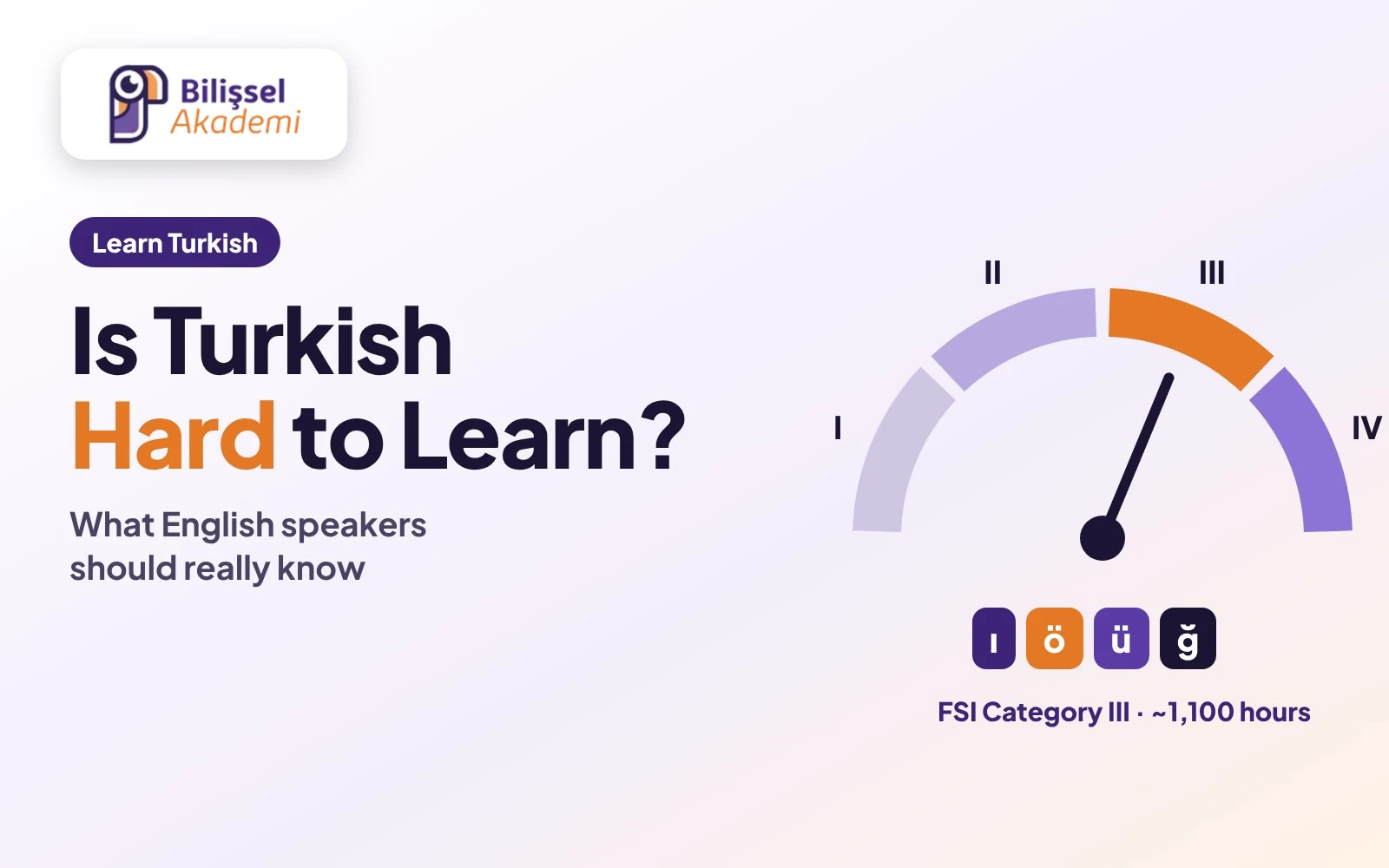
The best-known benchmark comes from the US Foreign Service Institute, which trains American diplomats. It places Turkish in Category III: languages with significant linguistic or cultural differences from English. FSI estimates about 44 weeks, or roughly 1,100 class hours, for an English speaker to reach professional working proficiency.
1,100 h
FSI estimate for professional working proficiency
44 weeks
of full-time, intensive study
Cat. III
same group as Russian, Greek and Hindi
That sounds like a lot, but notice the target: professional proficiency, the level where you could negotiate or give a presentation. Everyday conversation needs far less. And “fast” is really about two things you control: how many hours you put in, and how much of that time you spend actually listening and speaking.
What 90 days can realistically get you
| Daily time | Total in 90 days | Realistic result |
|---|
| 15 minutes | ~22 hours | Survival basics: greetings, numbers, ordering, simple questions |
| 30 minutes | ~45 hours | A good part of A1: introduce yourself, shop, ask the way, follow slow speech |
| 1 hour | ~90 hours | A1 and the first steps of A2 for most steady learners |
| 1.5 hours + daily practice in Turkey | 135+ hours | Comfortable A2 for many learners: everyday conversations, past and future |
These are rough ranges, not promises. Your native language, previous language learning and how much Turkish you hear every day all matter.
The Ankara advantage: If you live in Turkey, every errand is free practice. Ten minutes of real conversation at the bakkal can teach more than an hour of passive app tapping.
Your first 50 Turkish phrases (with audio)
Start with phrases, not grammar tables. A ready-made sentence like Yavaş konuşur musunuz? (Could you speak slowly?) is useful on day one, long before you can explain its suffixes.
PCFET0NUWVBFIGh0bWw+PGh0bWwgbGFuZz0idHIiPjxoZWFkPjxtZXRhIGNoYXJzZXQ9InV0Zi04Ij48bWV0YSBuYW1lPSJ2aWV3cG9ydCIgY29udGVudD0id2lkdGg9ZGV2aWNlLXdpZHRoLGluaXRpYWwtc2NhbGU9MSI+PHRpdGxlPkZpcnN0IDUwIFR1cmtpc2ggcGhyYXNlcyB3aXRoIGF1ZGlvPC90aXRsZT48c3R5bGU+Kntib3gtc2l6aW5nOmJvcmRlci1ib3h9aHRtbCxib2R5e21hcmdpbjowO2JhY2tncm91bmQ6dHJhbnNwYXJlbnR9aHRtbC5lbWJlZCxodG1sLmVtYmVkIGJvZHl7b3ZlcmZsb3c6aGlkZGVufQo6cm9vdHstLWE6IzNDMjQ3ODstLWEyOiM1QjNCQTY7LS1iOiNFNDc4MjQ7LS1iMjojRjI5QTRFOy0tc29mdDojRjNFRUZCOy0tb3NvZnQ6I0ZGRjFFNTstLWxpbmU6I0U3RTFGMjstLWluazojMUIxNDMzOy0tbXV0OiM1QzU0NzQ7LS1vazojMTY4MzRBOy0tb2tiZzojRTlGOEVGOy0tbm86I0M2MjgyODstLW5vYmc6I0ZERUNFQzstLXdhcm46IzlBNUEwMDstLXdhcm5iZzojRkZGNEUyOy0tcGFsZTojRkFGOEZEfQpib2R5e2ZvbnQtZmFtaWx5OiJQbHVzIEpha2FydGEgU2FucyIsc3lzdGVtLXVpLC1hcHBsZS1zeXN0ZW0sIlNlZ29lIFVJIixSb2JvdG8sQXJpYWwsc2Fucy1zZXJpZjtjb2xvcjp2YXIoLS1pbmspO2ZvbnQtc2l6ZToxNnB4O2xpbmUtaGVpZ2h0OjEuNTstd2Via2l0LXRleHQtc2l6ZS1hZGp1c3Q6MTAwJX0KI2FwcHtwYWRkaW5nOjJweH1odG1sOm5vdCguZW1iZWQpICNhcHB7bWF4LXdpZHRoOjc4MHB4O21hcmdpbjowIGF1dG87cGFkZGluZzoyMHB4IDE2cHh9Ci5ib3h7YmFja2dyb3VuZDojZmZmO2JvcmRlcjoycHggc29saWQgdmFyKC0tbGluZSk7Ym9yZGVyLXJhZGl1czoyMnB4O292ZXJmbG93OmhpZGRlbn0uYm94Ky5ib3h7bWFyZ2luLXRvcDoxNnB4fQouaGVhZHtiYWNrZ3JvdW5kOmxpbmVhci1ncmFkaWVudCgxMjBkZWcsdmFyKC0tYSksdmFyKC0tYTIpKTtjb2xvcjojZmZmO3BhZGRpbmc6MTRweCAxOHB4O2Rpc3BsYXk6ZmxleDtqdXN0aWZ5LWNvbnRlbnQ6c3BhY2UtYmV0d2VlbjthbGlnbi1pdGVtczpjZW50ZXI7Z2FwOjZweCAxMnB4O2ZsZXgtd3JhcDp3cmFwO2JvcmRlci1ib3R0b206NHB4IHNvbGlkIHZhcigtLWIpfQouaGVhZCBie2ZvbnQtc2l6ZToxOHB4O2xpbmUtaGVpZ2h0OjEuMjV9LmhlYWQgc3Bhbntmb250LXNpemU6MTMuNXB4O2NvbG9yOnJnYmEoMjU1LDI1NSwyNTUsLjg2KX0KLmJvZHl7cGFkZGluZzoxNnB4IDE4cHggMThweH0KLmludHJve2NvbG9yOnZhcigtLW11dCk7Zm9udC1zaXplOjE0LjVweDttYXJnaW46MCAwIDE0cHh9CmJ1dHRvbntmb250OmluaGVyaXQ7Y29sb3I6aW5oZXJpdDtjdXJzb3I6cG9pbnRlcjstd2Via2l0LXRhcC1oaWdobGlnaHQtY29sb3I6dHJhbnNwYXJlbnR9CmlucHV0LHNlbGVjdHtmb250OmluaGVyaXQ7Y29sb3I6aW5oZXJpdH0KLmJ0bntib3JkZXI6MDtib3JkZXItcmFkaXVzOjEycHg7cGFkZGluZzoxMHB4IDE2cHg7Zm9udC13ZWlnaHQ6ODAwO2ZvbnQtc2l6ZToxNXB4O2JhY2tncm91bmQ6dmFyKC0tYSk7Y29sb3I6I2ZmZjttaW4taGVpZ2h0OjQ0cHh9Ci5idG4ub3tiYWNrZ3JvdW5kOnZhcigtLWIpfS5idG4uZ2hvc3R7YmFja2dyb3VuZDojRjJFRkY4O2NvbG9yOnZhcigtLWluayl9LmJ0bjpkaXNhYmxlZHtvcGFjaXR5Oi40NTtjdXJzb3I6ZGVmYXVsdH0KLmJ0bnN7ZGlzcGxheTpmbGV4O2ZsZXgtd3JhcDp3cmFwO2dhcDo4cHg7bWFyZ2luLXRvcDoxMHB4fQouc3Bre2Rpc3BsYXk6aW5saW5lLWZsZXg7YWxpZ24taXRlbXM6Y2VudGVyO2p1c3RpZnktY29udGVudDpjZW50ZXI7Z2FwOjZweDtib3JkZXI6MS41cHggc29saWQgdmFyKC0tbGluZSk7YmFja2dyb3VuZDojZmZmO2JvcmRlci1yYWRpdXM6OTk5cHg7bWluLXdpZHRoOjQwcHg7aGVpZ2h0OjQwcHg7cGFkZGluZzowIDEycHg7Y29sb3I6dmFyKC0tYSk7Zm9udC13ZWlnaHQ6ODAwO2ZvbnQtc2l6ZToxMy41cHg7dmVydGljYWwtYWxpZ246bWlkZGxlO2ZsZXg6bm9uZTtsaW5lLWhlaWdodDoxfQouc3BrIHN2Z3t3aWR0aDoxOHB4O2hlaWdodDoxOHB4O2ZsZXg6bm9uZX0uc3BrOmhvdmVye2JvcmRlci1jb2xvcjp2YXIoLS1iKX0KLnNway5vbntiYWNrZ3JvdW5kOnZhcigtLW9zb2Z0KTtib3JkZXItY29sb3I6dmFyKC0tYik7YW5pbWF0aW9uOmJhLXB1bHNlIDFzIGluZmluaXRlfQouc3BrLmJpZ3toZWlnaHQ6NDZweDtwYWRkaW5nOjAgMThweDtmb250LXNpemU6MTVweDtiYWNrZ3JvdW5kOnZhcigtLWIpO2NvbG9yOiNmZmY7Ym9yZGVyLWNvbG9yOnZhcigtLWIpfS5zcGsuYmlnLm9ue2JhY2tncm91bmQ6dmFyKC0tYSk7Ym9yZGVyLWNvbG9yOnZhcigtLWEpO2NvbG9yOiNmZmZ9CkBrZXlmcmFtZXMgYmEtcHVsc2V7NTAle2JveC1zaGFkb3c6MCAwIDAgNnB4IHJnYmEoMjI4LDEyMCwzNiwuMTgpfX0KLnRye2NvbG9yOnZhcigtLW11dCk7Zm9udC1zaXplOjE0cHh9Ci50b3BsaW5le2Rpc3BsYXk6ZmxleDtqdXN0aWZ5LWNvbnRlbnQ6c3BhY2UtYmV0d2VlbjthbGlnbi1pdGVtczpjZW50ZXI7Z2FwOjhweDtmbGV4LXdyYXA6d3JhcH0KLmNudHtmb250LXNpemU6MTNweDtjb2xvcjp2YXIoLS1tdXQpO2ZvbnQtd2VpZ2h0OjgwMH0KLnByb2d7aGVpZ2h0OjhweDtiYWNrZ3JvdW5kOiNFRkVBRjc7Ym9yZGVyLXJhZGl1czo5OXB4O292ZXJmbG93OmhpZGRlbjttYXJnaW46NnB4IDAgMTRweH0ucHJvZyBpe2Rpc3BsYXk6YmxvY2s7aGVpZ2h0OjEwMCU7d2lkdGg6MDtiYWNrZ3JvdW5kOmxpbmVhci1ncmFkaWVudCg5MGRlZyx2YXIoLS1hKSx2YXIoLS1iKSk7dHJhbnNpdGlvbjp3aWR0aCAuM3N9Ci5xe2JvcmRlcjoxLjVweCBzb2xpZCB2YXIoLS1saW5lKTtib3JkZXItcmFkaXVzOjE2cHg7cGFkZGluZzoxNHB4O21hcmdpbi1ib3R0b206MTJweH0KLnFue2ZvbnQtc2l6ZToxMnB4O2ZvbnQtd2VpZ2h0OjgwMDtjb2xvcjp2YXIoLS1iKTtsZXR0ZXItc3BhY2luZzouMDVlbTt0ZXh0LXRyYW5zZm9ybTp1cHBlcmNhc2V9Ci5xdHtmb250LXdlaWdodDo3MDA7bWFyZ2luOjRweCAwIDEwcHg7ZGlzcGxheTpmbGV4O2dhcDoxMHB4O2FsaWduLWl0ZW1zOmZsZXgtc3RhcnQ7anVzdGlmeS1jb250ZW50OnNwYWNlLWJldHdlZW59Ci5jdHh7YmFja2dyb3VuZDp2YXIoLS1wYWxlKTtib3JkZXItcmFkaXVzOjEwcHg7cGFkZGluZzo5cHggMTJweDttYXJnaW46MCAwIDEwcHg7Zm9udC1zaXplOjE1LjVweH0KLmxpc3RlbntkaXNwbGF5OmZsZXg7Z2FwOjhweDtmbGV4LXdyYXA6d3JhcDttYXJnaW46MnB4IDAgMTJweH0KLm9wdHN7ZGlzcGxheTpncmlkO2dhcDo4cHh9Lm9wdHMucm93e2dyaWQtdGVtcGxhdGUtY29sdW1uczpyZXBlYXQoYXV0by1maWxsLG1pbm1heCgxMThweCwxZnIpKX0KLm9wdHtib3JkZXI6MS41cHggc29saWQgdmFyKC0tbGluZSk7YmFja2dyb3VuZDojZmZmO2JvcmRlci1yYWRpdXM6MTJweDtwYWRkaW5nOjEwcHggMTJweDt0ZXh0LWFsaWduOmxlZnQ7Zm9udC13ZWlnaHQ6NjAwO21pbi1oZWlnaHQ6NDRweH0KLm9wdDpob3Zlcjpub3QoOmRpc2FibGVkKXtib3JkZXItY29sb3I6dmFyKC0tYil9Lm9wdDpkaXNhYmxlZHtjdXJzb3I6ZGVmYXVsdH0KLm9re2JvcmRlci1jb2xvcjp2YXIoLS1vaykhaW1wb3J0YW50O2JhY2tncm91bmQ6dmFyKC0tb2tiZykhaW1wb3J0YW50O2NvbG9yOiMwRTVBMzEhaW1wb3J0YW50fQoubm97Ym9yZGVyLWNvbG9yOnZhcigtLW5vKSFpbXBvcnRhbnQ7YmFja2dyb3VuZDp2YXIoLS1ub2JnKSFpbXBvcnRhbnQ7Y29sb3I6IzhFMUIxQiFpbXBvcnRhbnR9Ci53aHl7ZGlzcGxheTpub25lO21hcmdpbi10b3A6MTBweDtmb250LXNpemU6MTQuNXB4O3BhZGRpbmc6MTBweCAxMnB4O2JvcmRlci1yYWRpdXM6MTJweDtiYWNrZ3JvdW5kOnZhcigtLXBhbGUpfS53aHkuc2hvd3tkaXNwbGF5OmJsb2NrfQoucmVze2Rpc3BsYXk6bm9uZTtib3JkZXItcmFkaXVzOjE2cHg7cGFkZGluZzoxNnB4O2JhY2tncm91bmQ6dmFyKC0tc29mdCk7bWFyZ2luLXRvcDo2cHh9LnJlcy5zaG93e2Rpc3BsYXk6YmxvY2t9Ci5yZXMgLmJpZ3tmb250LXNpemU6MzBweDtmb250LXdlaWdodDo4MDA7Y29sb3I6dmFyKC0tYSk7bGluZS1oZWlnaHQ6MS4xfS5yZXMgaDR7bWFyZ2luOjRweCAwIDRweDtmb250LXNpemU6MThweH0ucmVzIHB7bWFyZ2luOjB9Ci5jdGF7ZGlzcGxheTpmbGV4O2ZsZXgtd3JhcDp3cmFwO2dhcDo4cHg7bWFyZ2luLXRvcDoxMnB4fQouY3RhIGF7ZmxleDoxIDEgMTcwcHg7dGV4dC1hbGlnbjpjZW50ZXI7Ym9yZGVyLXJhZGl1czoxMnB4O3BhZGRpbmc6MTFweCAxNHB4O2ZvbnQtd2VpZ2h0OjgwMDt0ZXh0LWRlY29yYXRpb246bm9uZTtmb250LXNpemU6MTVweH0KLmN0YSAucHtiYWNrZ3JvdW5kOnZhcigtLWIpO2NvbG9yOiNmZmZ9LmN0YSAud3tiYWNrZ3JvdW5kOiNFN0Y4RUU7Y29sb3I6IzEyNkIzNX0uY3RhIC5ne2JhY2tncm91bmQ6I0YyRUZGODtjb2xvcjp2YXIoLS1pbmspfQoubm90ZXtmb250LXNpemU6MTIuNXB4O2NvbG9yOnZhcigtLW11dCk7bWFyZ2luLXRvcDoxMHB4fQoudG9hc3R7ZGlzcGxheTpub25lO21hcmdpbi10b3A6MTBweDtmb250LXNpemU6MTMuNXB4O2JhY2tncm91bmQ6dmFyKC0td2FybmJnKTtib3JkZXI6MXB4IHNvbGlkICNGNUQ5QTY7Y29sb3I6IzdBNEEwMDtib3JkZXItcmFkaXVzOjEwcHg7cGFkZGluZzo4cHggMTBweH0udG9hc3Quc2hvd3tkaXNwbGF5OmJsb2NrfQouY2hpcHtkaXNwbGF5OmlubGluZS1mbGV4O2FsaWduLWl0ZW1zOmNlbnRlcjtnYXA6NnB4O2JvcmRlcjoxLjVweCBzb2xpZCB2YXIoLS1saW5lKTtiYWNrZ3JvdW5kOiNmZmY7Ym9yZGVyLXJhZGl1czoxMnB4O3BhZGRpbmc6OHB4IDEycHg7Zm9udC13ZWlnaHQ6NzAwO21hcmdpbjo0cHg7Zm9udC1zaXplOjE1cHg7bWluLWhlaWdodDo0NHB4fQouY2hpcC5zZWx7Ym9yZGVyLWNvbG9yOnZhcigtLWEpO2JhY2tncm91bmQ6dmFyKC0tc29mdCk7Y29sb3I6dmFyKC0tYSl9Ci5pbnB7bWluLXdpZHRoOjA7Ym9yZGVyOjEuNXB4IHNvbGlkIHZhcigtLWxpbmUpO2JvcmRlci1yYWRpdXM6MTBweDtwYWRkaW5nOjhweCAxMHB4O2ZvbnQtc2l6ZToxNnB4O2JhY2tncm91bmQ6I2ZmZjt3aWR0aDoxMDAlfQouaW5wOmZvY3Vze291dGxpbmU6bm9uZTtib3JkZXItY29sb3I6dmFyKC0tYil9Ci50YWd7ZGlzcGxheTppbmxpbmUtYmxvY2s7Zm9udC1zaXplOjExLjVweDtmb250LXdlaWdodDo4MDA7Ym9yZGVyLXJhZGl1czo5OTlweDtwYWRkaW5nOjNweCA5cHg7YmFja2dyb3VuZDp2YXIoLS1zb2Z0KTtjb2xvcjp2YXIoLS1hKX0KLm11dGVke2NvbG9yOnZhcigtLW11dCl9Ci5iYWRnZXtkaXNwbGF5OmlubGluZS1mbGV4O2FsaWduLWl0ZW1zOmNlbnRlcjtnYXA6NnB4O2JvcmRlci1yYWRpdXM6OTk5cHg7cGFkZGluZzo1cHggMTJweDtmb250LXdlaWdodDo4MDA7Zm9udC1zaXplOjE0cHh9Ci5iLW9re2JhY2tncm91bmQ6dmFyKC0tb2tiZyk7Y29sb3I6IzBFNUEzMX0uYi1ub3tiYWNrZ3JvdW5kOnZhcigtLW5vYmcpO2NvbG9yOiM4RTFCMUJ9LmItd2FybntiYWNrZ3JvdW5kOnZhcigtLXdhcm5iZyk7Y29sb3I6dmFyKC0td2Fybil9LmItaW5mb3tiYWNrZ3JvdW5kOnZhcigtLXNvZnQpO2NvbG9yOnZhcigtLWEpfQoucGFuZWx7Ym9yZGVyLXJhZGl1czoxNnB4O3BhZGRpbmc6MTRweCAxNnB4O21hcmdpbi10b3A6MTJweDtiYWNrZ3JvdW5kOnZhcigtLXBhbGUpO2JvcmRlcjoxLjVweCBzb2xpZCB2YXIoLS1saW5lKX0KLnBhbmVsIGg0e21hcmdpbjowIDAgNnB4O2ZvbnQtc2l6ZToxN3B4fS5wYW5lbCBwe21hcmdpbjo0cHggMH0KLnN0YXR7ZGlzcGxheTpncmlkO2dyaWQtdGVtcGxhdGUtY29sdW1uczpyZXBlYXQoYXV0by1maXQsbWlubWF4KDEzMHB4LDFmcikpO2dhcDo4cHg7bWFyZ2luOjEwcHggMH0KLnN0YXQgZGl2e2JhY2tncm91bmQ6I2ZmZjtib3JkZXI6MS41cHggc29saWQgdmFyKC0tbGluZSk7Ym9yZGVyLXJhZGl1czoxNHB4O3BhZGRpbmc6MTBweCAxMnB4fQouc3RhdCBzbWFsbHtkaXNwbGF5OmJsb2NrO2ZvbnQtc2l6ZToxMnB4O2ZvbnQtd2VpZ2h0OjgwMDtjb2xvcjp2YXIoLS1tdXQpO3RleHQtdHJhbnNmb3JtOnVwcGVyY2FzZTtsZXR0ZXItc3BhY2luZzouMDRlbX0uc3RhdCBie2ZvbnQtc2l6ZToyMnB4O2NvbG9yOnZhcigtLWEpfQouc2Vne2Rpc3BsYXk6ZmxleDtmbGV4LXdyYXA6d3JhcDtnYXA6NnB4fS5zZWcgYnV0dG9ue2JvcmRlcjoxLjVweCBzb2xpZCB2YXIoLS1saW5lKTtiYWNrZ3JvdW5kOiNmZmY7Ym9yZGVyLXJhZGl1czo5OTlweDtwYWRkaW5nOjhweCAxNHB4O2ZvbnQtd2VpZ2h0OjcwMDttaW4taGVpZ2h0OjQycHh9LnNlZyBidXR0b24uc2Vse2JhY2tncm91bmQ6dmFyKC0tYSk7Ym9yZGVyLWNvbG9yOnZhcigtLWEpO2NvbG9yOiNmZmZ9Ci5yYW5nZXt3aWR0aDoxMDAlO2FjY2VudC1jb2xvcjp2YXIoLS1iKTtoZWlnaHQ6MjhweH0KQG1lZGlhIChtYXgtd2lkdGg6NDgwcHgpey5ib2R5e3BhZGRpbmc6MTRweCAxMnB4IDE2cHh9LmhlYWR7cGFkZGluZzoxMnB4IDE0cHh9LmhlYWQgYntmb250LXNpemU6MTYuNXB4fS5zdGF0IGJ7Zm9udC1zaXplOjE5cHh9fQoKW2xhbmc9YXJdLC5hcntmb250LWZhbWlseToiTm90byBOYXNraCBBcmFiaWMiLCJBbWlyaSIsIkdlZXphIFBybyIsIlRyYWRpdGlvbmFsIEFyYWJpYyIsIlNlZ29lIFVJIiwiVGFob21hIixBcmlhbCxzYW5zLXNlcmlmO2RpcmVjdGlvbjpydGw7dW5pY29kZS1iaWRpOmlzb2xhdGU7Zm9udC1zaXplOjEuMjhlbTtsaW5lLWhlaWdodDoxLjc1O2ZvbnQtd2VpZ2h0OjYwMH0KLnRybHtmb250LXN0eWxlOml0YWxpYztjb2xvcjp2YXIoLS1tdXQpO2ZvbnQtc2l6ZToxNHB4fQo8L3N0eWxlPjwvaGVhZD48Ym9keT48ZGl2IGlkPSJhcHAiPjwvZGl2PjxzY3JpcHQ+KGZ1bmN0aW9uKCl7InVzZSBzdHJpY3QiOwp2YXIgRD1kb2N1bWVudCxXPXdpbmRvdyxCQT1XLkJBPXtjOnt9LGxhbmc6InRyLVRSIn07CmZ1bmN0aW9uIGVzYyhzKXtyZXR1cm4gU3RyaW5nKHM9PW51bGw/IiI6cykucmVwbGFjZSgvWyY8PiJdL2csZnVuY3Rpb24oYyl7cmV0dXJueyImIjoiJmFtcDsiLCI8IjoiJmx0OyIsIj4iOiImZ3Q7IiwnIic6IiZxdW90OyJ9W2NdfSk7fQpCQS5lc2M9ZXNjOwpCQS5mbXQ9ZnVuY3Rpb24oeCxkKXtpZih4PT1udWxsfHxpc05hTih4KSlyZXR1cm4i4oCTIjt2YXIgcz0oK3gpLnRvRml4ZWQoZD09bnVsbD8yOmQpO3JldHVybiBzLnJlcGxhY2UoIi4iLCIsIik7fTsKdmFyIElDT049Jzxzdmcgdmlld0JveD0iMCAwIDI0IDI0IiBhcmlhLWhpZGRlbj0idHJ1ZSI+PHBhdGggZmlsbD0iY3VycmVudENvbG9yIiBkPSJNMyA5LjV2NWgzLjZMMTEgMTguNXYtMTNMNi42IDkuNUgzem0xMi4zIDIuNWEzLjYgMy42IDAgMCAwLTIuMS0zLjN2Ni42YTMuNiAzLjYgMCAwIDAgMi4xLTMuM3pNMTMuMiA0LjN2MmE2IDYgMCAwIDEgMCAxMS40djJhOCA4IDAgMCAwIDAtMTUuNHoiLz48L3N2Zz4nOwpCQS5pY29uPUlDT047CkJBLnNwaz1mdW5jdGlvbih0LGxhYmVsLGNscyxyYXRlLGxhbmcpe3JldHVybiAnPGJ1dHRvbiB0eXBlPSJidXR0b24iIGNsYXNzPSJzcGsnKyhjbHM/IiAiK2NsczoiIikrJyIgZGF0YS1zYXk9IicrZXNjKHQpKyciJysocmF0ZT8nIGRhdGEtcmF0ZT0iJytyYXRlKyciJzoiIikrKGxhbmc/JyBkYXRhLWxhbmc9IicrbGFuZysnIic6IiIpKycgYXJpYS1sYWJlbD0iRGlubGUnKyhsYWJlbD8iICgiK2VzYyhsYWJlbCkrIikiOiIiKSsnIj4nK0lDT04rKGxhYmVsPyI8c3Bhbj4iK2xhYmVsKyI8L3NwYW4+IjoiIikrIjwvYnV0dG9uPiI7fTsKQkEuc2h1ZmZsZT1mdW5jdGlvbihhKXt2YXIgYj1hLnNsaWNlKCksaz0wO2Rve2Zvcih2YXIgaT1iLmxlbmd0aC0xO2k+MDtpLS0pe3ZhciBqPU1hdGguZmxvb3IoTWF0aC5yYW5kb20oKSooaSsxKSksdD1iW2ldO2JbaV09YltqXTtiW2pdPXQ7fWsrKzt9d2hpbGUoYi5sZW5ndGg+MSYmazw4JiZiLmpvaW4oIlx1MDAwMSIpPT09YS5qb2luKCJcdTAwMDEiKSk7cmV0dXJuIGI7fTsKQkEubm9Wb2ljZT1mdW5jdGlvbihMTil7aWYoQkEudWk9PT0iZW4iKXt2YXIgdWEwPW5hdmlnYXRvci51c2VyQWdlbnR8fCIiLHcwPS9XaW5kb3dzLy50ZXN0KHVhMCksZTA9L0VkZ1wvLy50ZXN0KHVhMCksbTA9L0FuZHJvaWR8aVBob25lfGlQYWR8TW9iaWxlLy50ZXN0KHVhMCksdDA9Ik5vIFR1cmtpc2ggdm9pY2Ugd2FzIGZvdW5kIG9uIHRoaXMgZGV2aWNlLCBzbyB5b3UgbWF5IG5vdCBoZWFyIHRoZSBhdWRpby4gIjtpZih3MCYmIWUwKXQwKz0iT24gV2luZG93cyB0aGUgZWFzaWVzdCBmaXggaXMgdG8gb3BlbiB0aGlzIHBhZ2UgaW4gTWljcm9zb2Z0IEVkZ2UuIFRvIHN0YXkgaW4gQ2hyb21lLCBhZGQgYSBUdXJraXNoIHZvaWNlIGluIFdpbmRvd3MgU2V0dGluZ3MgPiBUaW1lICYgbGFuZ3VhZ2UgPiBTcGVlY2ggYW5kIHJlc3RhcnQgQ2hyb21lLiI7ZWxzZSBpZih3MCl0MCs9IkFkZCBhIFR1cmtpc2ggdm9pY2UgaW4gV2luZG93cyBTZXR0aW5ncyA+IFRpbWUgJiBsYW5ndWFnZSA+IFNwZWVjaCBhbmQgcmVzdGFydCB0aGUgYnJvd3Nlci4iO2Vsc2UgaWYobTApdDArPSJZb3UgY2FuIGFkZCBhIFR1cmtpc2ggdm9pY2UgaW4geW91ciBwaG9uZSdzIHRleHQtdG8tc3BlZWNoIHNldHRpbmdzLiI7ZWxzZSB0MCs9IkFkZCBhIFR1cmtpc2ggdGV4dC10by1zcGVlY2ggdm9pY2UgaW4geW91ciBkZXZpY2Ugc2V0dGluZ3MgYW5kIHJlc3RhcnQgdGhlIGJyb3dzZXIuIjtyZXR1cm4gdDA7fXZhciB1YT1uYXZpZ2F0b3IudXNlckFnZW50fHwiIix3aW49L1dpbmRvd3MvLnRlc3QodWEpLGVkZ2U9L0VkZ1wvLy50ZXN0KHVhKSxtb2I9L0FuZHJvaWR8aVBob25lfGlQYWR8TW9iaWxlLy50ZXN0KHVhKSxtPSJCdSBjaWhhemRhICIrTE4rIiBzZXMgYnVsdW5hbWFkxLEsIGJ1IHnDvHpkZW4gb2t1bnXFnyBkdXl1bG1heWFiaWxpci4gIjtpZih3aW4mJiFlZGdlKW0rPSJXaW5kb3dzJ3RhIGVuIGtvbGF5IMOnw7Z6w7xtIHNheWZhecSxIE1pY3Jvc29mdCBFZGdlIGlsZSBhw6dtYWsuIENocm9tZSdkYSBrYWxtYWsgaXN0ZXJzZW5peiBXaW5kb3dzIEF5YXJsYXIgPiBTYWF0IHZlIGRpbCA+IEtvbnXFn21hIGLDtmzDvG3DvG5kZW4gIitMTisiIHNlcyBla2xleWlwIENocm9tZSd1IHllbmlkZW4gYmHFn2xhdMSxbi4iO2Vsc2UgaWYod2luKW0rPSJXaW5kb3dzIEF5YXJsYXIgPiBTYWF0IHZlIGRpbCA+IEtvbnXFn21hIGLDtmzDvG3DvG5kZW4gIitMTisiIHNlcyBla2xleWlwIHRhcmF5xLFjxLF5xLEgeWVuaWRlbiBiYcWfbGF0xLFuLiI7ZWxzZSBpZihtb2IpbSs9IlRlbGVmb24gYXlhcmxhcsSxbmRha2kgbWV0aW4gb2t1bWEgKHlhesSxZGFuIGtvbnXFn21heWEpIGLDtmzDvG3DvG5kZW4gIitMTisiIHNlc2kgZWtsZXllYmlsaXJzaW5pei4iO2Vsc2UgbSs9IkNpaGF6xLFuIGF5YXJsYXLEsW5kYW4gIitMTisiIG1ldGluIG9rdW1hIHNlc2kgZWtsZXlpcCB0YXJhecSxY8SxecSxIHllbmlkZW4gYmHFn2xhdMSxbi4iO3JldHVybiBtO307Ci8qIC0tLS0tLS0tLS0gc3BlZWNoIChsYW5ndWFnZS1hd2FyZSkgLS0tLS0tLS0tLSAqLwp2YXIgVFRTPUJBLnR0cz17djpudWxsLApwaWNrOmZ1bmN0aW9uKCl7aWYoISgic3BlZWNoU3ludGhlc2lzIiBpbiBXKSlyZXR1cm47dmFyIEw9QkEubGFuZyxiYXNlPUwuc3BsaXQoIi0iKVswXS50b0xvd2VyQ2FzZSgpLHZzPVcuc3BlZWNoU3ludGhlc2lzLmdldFZvaWNlcygpfHxbXSwKbT12cy5maWx0ZXIoZnVuY3Rpb24odil7cmV0dXJuIHYubGFuZyYmdi5sYW5nLnJlcGxhY2UoIl8iLCItIikudG9Mb3dlckNhc2UoKS5pbmRleE9mKGJhc2UpPT09MDt9KTsKdmFyIGV4PW0uZmlsdGVyKGZ1bmN0aW9uKHYpe3JldHVybiB2LmxhbmcucmVwbGFjZSgiXyIsIi0iKS50b0xvd2VyQ2FzZSgpPT09TC50b0xvd2VyQ2FzZSgpO30pO3RoaXMudj1leC5maWx0ZXIoZnVuY3Rpb24odil7cmV0dXJuIC9nb29nbGUvaS50ZXN0KHYubmFtZSk7fSlbMF18fG0uZmlsdGVyKGZ1bmN0aW9uKHYpe3JldHVybiAvZ29vZ2xlL2kudGVzdCh2Lm5hbWUpO30pWzBdfHxleC5maWx0ZXIoZnVuY3Rpb24odil7cmV0dXJuIC9uYXR1cmFsfG9ubGluZXxuZXVyYWwvaS50ZXN0KHYubmFtZSk7fSlbMF18fG0uZmlsdGVyKGZ1bmN0aW9uKHYpe3JldHVybiAvbmF0dXJhbHxvbmxpbmV8bmV1cmFsL2kudGVzdCh2Lm5hbWUpO30pWzBdfHxtLmZpbHRlcihmdW5jdGlvbih2KXtyZXR1cm4gdi5sYW5nLnJlcGxhY2UoIl8iLCItIikudG9Mb3dlckNhc2UoKT09PUwudG9Mb3dlckNhc2UoKTt9KVswXXx8bVswXXx8bnVsbDt9LAp2b2ljZUZvcjpmdW5jdGlvbihMKXtpZighKCJzcGVlY2hTeW50aGVzaXMiIGluIFcpKXJldHVybiBudWxsO3ZhciB2cz1XLnNwZWVjaFN5bnRoZXNpcy5nZXRWb2ljZXMoKXx8W10sbD1MLnRvTG93ZXJDYXNlKCksYmFzZT1sLnNwbGl0KCItIilbMF0sbm09ZnVuY3Rpb24odil7cmV0dXJuICh2Lmxhbmd8fCIiKS5yZXBsYWNlKCJfIiwiLSIpLnRvTG93ZXJDYXNlKCk7fTsKdmFyIGV4PXZzLmZpbHRlcihmdW5jdGlvbih2KXtyZXR1cm4gbm0odik9PT1sO30pLG09dnMuZmlsdGVyKGZ1bmN0aW9uKHYpe3JldHVybiBubSh2KS5pbmRleE9mKGJhc2UpPT09MDt9KTt2YXIgcHJlZj1mdW5jdGlvbihhKXtyZXR1cm4gYS5maWx0ZXIoZnVuY3Rpb24odil7cmV0dXJuIC9nb29nbGUvaS50ZXN0KHYubmFtZSk7fSlbMF18fGEuZmlsdGVyKGZ1bmN0aW9uKHYpe3JldHVybiAvbmF0dXJhbHxvbmxpbmV8bmV1cmFsL2kudGVzdCh2Lm5hbWUpO30pWzBdfHxhWzBdfHxudWxsO307CnJldHVybiB7djpwcmVmKGV4KXx8cHJlZihtKSxleGFjdDpleC5sZW5ndGg+MH07fSwKc2F5OmZ1bmN0aW9uKHQscmF0ZSxidG4sbGFuZyl7aWYoISgic3BlZWNoU3ludGhlc2lzIiBpbiBXKXx8IVcuU3BlZWNoU3ludGhlc2lzVXR0ZXJhbmNlKXtCQS50b2FzdChCQS51aT09PSJlbiI/IllvdXIgYnJvd3NlciBkb2VzIG5vdCBzdXBwb3J0IHNwZWVjaC4gVHJ5IENocm9tZSwgRWRnZSBvciBTYWZhcmkuIjoiVGFyYXnEsWPEsW7EsXogc2VzbGkgb2t1bWF5xLEgZGVzdGVrbGVtaXlvci4gQ2hyb21lLCBFZGdlIHZleWEgU2FmYXJpIGlsZSBkZW5leWluLiIpO3JldHVybjt9CnZhciBTPVcuc3BlZWNoU3ludGhlc2lzO1MuY2FuY2VsKCk7aWYoIXRoaXMudil0aGlzLnBpY2soKTsKdmFyIHU9bmV3IFcuU3BlZWNoU3ludGhlc2lzVXR0ZXJhbmNlKHQpO3UubGFuZz1CQS5sYW5nO2lmKHRoaXMudil1LnZvaWNlPXRoaXMudjtpZihsYW5nJiZsYW5nIT09QkEubGFuZyl7dS5sYW5nPWxhbmc7dmFyIHZmPXRoaXMudm9pY2VGb3IobGFuZyk7aWYodmYmJnZmLnYpdS52b2ljZT12Zi52O311LnJhdGU9cmF0ZXx8MC45NTt1LnBpdGNoPTE7CkQucXVlcnlTZWxlY3RvckFsbCgiLnNway5vbiIpLmZvckVhY2goZnVuY3Rpb24oYil7Yi5jbGFzc0xpc3QucmVtb3ZlKCJvbiIpO30pOwppZihidG4pe2J0bi5jbGFzc0xpc3QuYWRkKCJvbiIpO3ZhciBvZmY9ZnVuY3Rpb24oKXtidG4uY2xhc3NMaXN0LnJlbW92ZSgib24iKTt9O3Uub25lbmQ9b2ZmO3Uub25lcnJvcj1vZmY7c2V0VGltZW91dChvZmYsTWF0aC5tYXgoMjUwMCx0Lmxlbmd0aCoxMjAvKHJhdGV8fDAuOTUpKSk7fQpTLnNwZWFrKHUpOwppZighdGhpcy52JiYhdGhpcy53YXJuZWQpe3ZhciBzZWxmPXRoaXM7c2V0VGltZW91dChmdW5jdGlvbigpe3NlbGYucGljaygpO2lmKCFzZWxmLnYpe3NlbGYud2FybmVkPTE7dmFyIExOPXt0cjoiVMO8cmvDp2UiLGRlOiJBbG1hbmNhIChEZXV0c2NoKSIsZW46IsSwbmdpbGl6Y2UiLGZyOiJGcmFuc8SxemNhIixpdDoixLB0YWx5YW5jYSIsYXI6IkFyYXDDp2EifVtCQS5sYW5nLnNwbGl0KCItIilbMF1dfHwiYnUgZGlsIjtCQS50b2FzdChCQS5ub1ZvaWNlKExOKSk7fX0sNzAwKTt9Cn19OwppZigic3BlZWNoU3ludGhlc2lzIiBpbiBXKXtUVFMucGljaygpO3RyeXtXLnNwZWVjaFN5bnRoZXNpcy5hZGRFdmVudExpc3RlbmVyKCJ2b2ljZXNjaGFuZ2VkIixmdW5jdGlvbigpe1RUUy5waWNrKCk7fSk7fWNhdGNoKGUpe1cuc3BlZWNoU3ludGhlc2lzLm9udm9pY2VzY2hhbmdlZD1mdW5jdGlvbigpe1RUUy5waWNrKCk7fTt9fQpELmFkZEV2ZW50TGlzdGVuZXIoImNsaWNrIixmdW5jdGlvbihlKXt2YXIgYj1lLnRhcmdldC5jbG9zZXN0JiZlLnRhcmdldC5jbG9zZXN0KCJbZGF0YS1zYXldIik7aWYoIWIpcmV0dXJuO2UucHJldmVudERlZmF1bHQoKTtUVFMuc2F5KGIuZ2V0QXR0cmlidXRlKCJkYXRhLXNheSIpLGIuZ2V0QXR0cmlidXRlKCJkYXRhLXJhdGUiKT8rYi5nZXRBdHRyaWJ1dGUoImRhdGEtcmF0ZSIpOjAsYixiLmdldEF0dHJpYnV0ZSgiZGF0YS1sYW5nIikpO30pOwovKiAtLS0tLS0tLS0tIGxheW91dCBoZWxwZXJzIC0tLS0tLS0tLS0gKi8KQkEudG9hc3Q9ZnVuY3Rpb24obXNnKXt2YXIgdD1ELnF1ZXJ5U2VsZWN0b3IoIiNiYS10b2FzdCIpO2lmKCF0KXJldHVybjt0LnRleHRDb250ZW50PW1zZzt0LmNsYXNzTGlzdC5hZGQoInNob3ciKTtCQS5wb3N0KCk7fTsKQkEuYm94PWZ1bmN0aW9uKGIpe3ZhciBzPUQuY3JlYXRlRWxlbWVudCgic2VjdGlvbiIpO3MuY2xhc3NOYW1lPSJib3giO3MuaW5uZXJIVE1MPSc8ZGl2IGNsYXNzPSJoZWFkIj48Yj4nKyhiLnRpdGxlfHwiIikrIjwvYj4iKyhiLnN1Yj8iPHNwYW4+IitiLnN1YisiPC9zcGFuPiI6IiIpKyc8L2Rpdj48ZGl2IGNsYXNzPSJib2R5Ij4nKyhiLmludHJvPyc8cCBjbGFzcz0iaW50cm8iPicrYi5pbnRybysiPC9wPiI6IiIpKyc8ZGl2IGNsYXNzPSJpbm5lciI+PC9kaXY+PC9kaXY+JztyZXR1cm4gczt9OwpCQS5jb3VudGVyPWZ1bmN0aW9uKHJvb3QsbixsYWJlbCl7dmFyIHc9RC5jcmVhdGVFbGVtZW50KCJkaXYiKTt3LmlubmVySFRNTD0nPGRpdiBjbGFzcz0idG9wbGluZSI+PHNwYW4gY2xhc3M9ImNudCI+MCAvICcrbisiICIrKGxhYmVsfHwieWFuxLF0IikrJzwvc3Bhbj48c3BhbiBjbGFzcz0iY250IHNjIj48L3NwYW4+PC9kaXY+PGRpdiBjbGFzcz0icHJvZyI+PGk+PC9pPjwvZGl2Pic7cm9vdC5hcHBlbmRDaGlsZCh3KTsKcmV0dXJue3NldDpmdW5jdGlvbihkLHMpe3cucXVlcnlTZWxlY3RvcigiLmNudCIpLnRleHRDb250ZW50PWQrIiAvICIrbisiICIrKGxhYmVsfHwieWFuxLF0Iik7dy5xdWVyeVNlbGVjdG9yKCIucHJvZyBpIikuc3R5bGUud2lkdGg9KDEwMCpkL24pKyIlIjt3LnF1ZXJ5U2VsZWN0b3IoIi5zYyIpLnRleHRDb250ZW50PWQ/KCJEb8SfcnU6ICIrcyk6IiI7fX07fTsKQkEuY3RhSHRtbD1mdW5jdGlvbihjKXtpZighYylyZXR1cm4iIjtyZXR1cm4gKGMudGV4dD8nPHAgc3R5bGU9Im1hcmdpbi10b3A6MTBweCI+JytjLnRleHQrIjwvcD4iOiIiKSsnPGRpdiBjbGFzcz0iY3RhIj4nK2MubGlua3MubWFwKGZ1bmN0aW9uKGwpe3JldHVybiAnPGEgY2xhc3M9IicrKGwuY3x8InAiKSsnIiBocmVmPSInK2VzYyhsLmhyZWYpKyciIHRhcmdldD0iX3RvcCIgcmVsPSJub29wZW5lciI+JytsLmwrIjwvYT4iO30pLmpvaW4oIiIpKyI8L2Rpdj4iO307CkJBLnJlc3VsdD1mdW5jdGlvbihjZmcsc2NvcmUsbil7dmFyIGJhbmRzPWNmZy5iYW5kc3x8W3ttaW46MSx0OiJLdXN1cnN1eiEiLGQ6IkJ1IGtvbnV5dSBvdHVydG11xZ9zdW4uIEJpciBzb25yYWtpIGtvbnV5YSBnZcOnZWJpbGlyc2luLiJ9LHttaW46MC42LHQ6IsOHb2sgaXlpIGdpZGl5b3JzdW4iLGQ6IllhbmzEscWfIHlhcHTEscSfxLFuIHNvcnVsYXLEsW4gYcOnxLFrbGFtYWxhcsSxbsSxIGJpciBrZXogZGFoYSBva3UuIn0se21pbjowLHQ6IlRla3JhciB6YW1hbsSxIixkOiJZdWthcsSxZGFraSBhbmxhdMSxbWEgZMO2bsO8cCDDtnJuZWtsZXJpIHllbmlkZW4gw6fDtnosIHNvbnJhIHRlc3RpIGJhxZ90YW4gZGVuZS4ifV07CnZhciByPXNjb3JlL24sYj1iYW5kc1tiYW5kcy5sZW5ndGgtMV07Zm9yKHZhciBpPTA7aTxiYW5kcy5sZW5ndGg7aSsrKXtpZihyPj1iYW5kc1tpXS5taW4pe2I9YmFuZHNbaV07YnJlYWs7fX0KcmV0dXJuICc8ZGl2IGNsYXNzPSJiaWciPicrc2NvcmUrIiAvICIrbisiPC9kaXY+PGg0PiIrYi50KyI8L2g0PjxwPiIrYi5kKyI8L3A+IitCQS5jdGFIdG1sKGNmZy5jdGEpKyc8ZGl2IGNsYXNzPSJidG5zIj48YnV0dG9uIHR5cGU9ImJ1dHRvbiIgY2xhc3M9ImJ0biBnaG9zdCByZWRvIj5CYcWfdGFuIMOnw7Z6PC9idXR0b24+PC9kaXY+Jzt9OwovKiAtLS0tLS0tLS0tIGhlaWdodCBtZXNzYWdpbmcgZm9yIHRoZSBzaXRlJ3MgYmEtZW1iZWQgbG9hZGVyIC0tLS0tLS0tLS0gKi8KdmFyIGluRnJhbWU9ZmFsc2U7dHJ5e2luRnJhbWU9Vy5zZWxmIT09Vy50b3A7fWNhdGNoKGUpe2luRnJhbWU9dHJ1ZTt9CmlmKGluRnJhbWUpRC5kb2N1bWVudEVsZW1lbnQuY2xhc3NMaXN0LmFkZCgiZW1iZWQiKTsKdmFyIGxhc3RIPTAsdG09MDsKQkEucG9zdD1mdW5jdGlvbigpe2NsZWFyVGltZW91dCh0bSk7dG09c2V0VGltZW91dChmdW5jdGlvbigpe3ZhciBhPUQuZ2V0RWxlbWVudEJ5SWQoImFwcCIpO2lmKCFhKXJldHVybjt2YXIgaD1NYXRoLmNlaWwoYS5nZXRCb3VuZGluZ0NsaWVudFJlY3QoKS5oZWlnaHQpKzY7aWYoTWF0aC5hYnMoaC1sYXN0SCk+MSl7bGFzdEg9aDt0cnl7Vy5wYXJlbnQucG9zdE1lc3NhZ2Uoe2JhRW1iZWRIZWlnaHQ6aH0sIioiKTt9Y2F0Y2goZSl7fX19LDMwKTt9OwovKiAtLS0tLS0tLS0tIFVJIGxhbmd1YWdlIChjZmcudWk9ImVuIikgLS0tLS0tLS0tLSAqLwpCQS5FTj1bWyJEaW5sZSB2ZSBkb8SfcnUgY2V2YWLEsSBzZcOnLiIsIkxpc3RlbiBhbmQgY2hvb3NlIHRoZSByaWdodCBhbnN3ZXIuIl0sWyLDh8O2esO8bcO8IGRpbmxlIiwiTGlzdGVuIHRvIHRoZSBleHBsYW5hdGlvbiJdLFsi4pyTIERvxJ9ydS4iLCLinJMgQ29ycmVjdC4iXSxbIuKclyBEb8SfcnUgY2V2YXA6ICIsIuKclyBBbnN3ZXI6ICJdLFsiQmHFn3RhbiDDp8O2eiIsIlRyeSBhZ2FpbiJdLFsiSGF0YXPEsXogZcWfbGXFn3RpcmRpbiEiLCJObyBtaXN0YWtlcyEiXSxbIiBoYXRhbMSxIGRlbmVtZW4gb2xkdS4gIiwiIHdyb25nIHRyaWVzLiAiXSxbIkhhdGFsxLEgZGVuZW1lOiAiLCJXcm9uZyB0cmllczogIl0sWyJLYXLEscWfdMSxciwgeWVuaWRlbiBveW5hIiwiU2h1ZmZsZSBhbmQgcGxheSBhZ2FpbiJdLFsiVGFtYW1sYW5kxLEiLCJEb25lIl0sWyIgZcWfbGXFn21lIiwiIG1hdGNoZWQiXSxbIkRvxJ9ydTogIiwiQ29ycmVjdDogIl0sWyIgeWFuxLF0IiwiIGFuc3dlcmVkIl0sWyJTb3J1ICIsIlF1ZXN0aW9uICJdLFsiWWF2YcWfIiwiU2xvdyJdLFsiU2VzaW5pIGtheWRldCIsIlJlY29yZCB5b3Vyc2VsZiJdLFsiS2F5ZMSxIGR1cmR1ciIsIlN0b3AgcmVjb3JkaW5nIl0sWyJNaWtyb2ZvbiBpem5pIHZlcmlsbWVkaS4gQWRyZXMgw6d1YnXEn3VuZGFraSBtaWtyb2ZvbiBzaW1nZXNpbmRlbiBpemluIHZlcmViaWxpcnNpbi4iLCJNaWNyb3Bob25lIHBlcm1pc3Npb24gd2FzIG5vdCBnaXZlbi4gWW91IGNhbiBhbGxvdyBpdCBmcm9tIHRoZSBtaWNyb3Bob25lIGljb24gaW4gdGhlIGFkZHJlc3MgYmFyLiJdLFsiVGFyYXnEsWPEsW4gc2VzIGtheWTEsW7EsSBkZXN0ZWtsZW1peW9yLiBUZWxlZm9udW51biBzZXMga2F5ZGVkaWNpc2l5bGUgZGUgw6dhbMSxxZ9hYmlsaXJzaW4uIiwiWW91ciBicm93c2VyIGNhbm5vdCByZWNvcmQgYXVkaW8uIFlvdSBjYW4gdXNlIHlvdXIgcGhvbmUncyB2b2ljZSByZWNvcmRlciBpbnN0ZWFkLiJdLFsiRGlubGUiLCJMaXN0ZW4iXV07CkJBLmkxOG49ZnVuY3Rpb24ocm9vdCl7ZnVuY3Rpb24gZml4KG4pe3ZhciBwPW4ucGFyZW50Tm9kZTt3aGlsZShwJiZwIT09cm9vdCl7aWYocC5nZXRBdHRyaWJ1dGUmJnAuZ2V0QXR0cmlidXRlKCJsYW5nIik9PT0idHIiKXJldHVybjtwPXAucGFyZW50Tm9kZTt9dmFyIHQ9bi5ub2RlVmFsdWUsbz10O0JBLkVOLmZvckVhY2goZnVuY3Rpb24ocil7aWYodC5pbmRleE9mKHJbMF0pPi0xKXQ9dC5zcGxpdChyWzBdKS5qb2luKHJbMV0pO30pO2lmKHQhPT1vKW4ubm9kZVZhbHVlPXQ7fQpmdW5jdGlvbiB3YWxrKGVsKXtpZihlbC5ub2RlVHlwZT09PTMpe2ZpeChlbCk7cmV0dXJuO31pZihlbC5ub2RlVHlwZSE9PTF8fGVsLnRhZ05hbWU9PT0iU0NSSVBUInx8ZWwudGFnTmFtZT09PSJTVFlMRSIpcmV0dXJuO2lmKGVsLmdldEF0dHJpYnV0ZSgibGFuZyIpPT09InRyIilyZXR1cm47Zm9yKHZhciBjPWVsLmZpcnN0Q2hpbGQ7YztjPWMubmV4dFNpYmxpbmcpd2FsayhjKTt9CndhbGsocm9vdCk7aWYoVy5NdXRhdGlvbk9ic2VydmVyKXtuZXcgTXV0YXRpb25PYnNlcnZlcihmdW5jdGlvbihtcyl7bXMuZm9yRWFjaChmdW5jdGlvbihtKXtpZihtLnR5cGU9PT0iY2hhcmFjdGVyRGF0YSIpZml4KG0udGFyZ2V0KTtlbHNlIG0uYWRkZWROb2Rlcy5mb3JFYWNoKHdhbGspO30pO30pLm9ic2VydmUocm9vdCx7Y2hpbGRMaXN0OnRydWUsc3VidHJlZTp0cnVlLGNoYXJhY3RlckRhdGE6dHJ1ZX0pO319OwovKiAtLS0tLS0tLS0tIHJ1bm5lciAtLS0tLS0tLS0tICovCkJBLnJ1bj1mdW5jdGlvbihjZmcpe3ZhciBhcHA9RC5nZXRFbGVtZW50QnlJZCgiYXBwIik7aWYoY2ZnLmxhbmcpQkEubGFuZz1jZmcubGFuZztpZihjZmcudWkpe0JBLnVpPWNmZy51aTtELmRvY3VtZW50RWxlbWVudC5sYW5nPWNmZy51aTt9aWYoY2ZnLnRoZW1lKXtmb3IodmFyIGsgaW4gY2ZnLnRoZW1lKUQuZG9jdW1lbnRFbGVtZW50LnN0eWxlLnNldFByb3BlcnR5KCItLSIrayxjZmcudGhlbWVba10pO30KdmFyIGJsb2Nrcz1jZmcuYmxvY2tzfHxbY2ZnXTtibG9ja3MuZm9yRWFjaChmdW5jdGlvbihiKXt2YXIgYm94PUJBLmJveChiKTthcHAuYXBwZW5kQ2hpbGQoYm94KTt2YXIgaW5uZXI9Ym94LnF1ZXJ5U2VsZWN0b3IoIi5pbm5lciIpO3RyeXtCQS5jW2IudHlwZV0oYixpbm5lcik7fWNhdGNoKGVycil7aW5uZXIuaW5uZXJIVE1MPSc8cCBjbGFzcz0ibXV0ZWQiPkJ1IGV0a2lubGlrIHnDvGtsZW5lbWVkaS48L3A+JztpZihXLmNvbnNvbGUpY29uc29sZS5lcnJvcihlcnIpO319KTsKaWYoY2ZnLmZvb3Qpe3ZhciBmPUQuY3JlYXRlRWxlbWVudCgicCIpO2YuY2xhc3NOYW1lPSJub3RlIjtmLmlubmVySFRNTD1jZmcuZm9vdDthcHAuYXBwZW5kQ2hpbGQoZik7fQppZihCQS51aT09PSJlbiIpQkEuaTE4bihhcHApO3ZhciB0PUQuY3JlYXRlRWxlbWVudCgiZGl2Iik7dC5pZD0iYmEtdG9hc3QiO3QuY2xhc3NOYW1lPSJ0b2FzdCI7dC5zZXRBdHRyaWJ1dGUoInJvbGUiLCJzdGF0dXMiKTthcHAuYXBwZW5kQ2hpbGQodCk7CmlmKFcuUmVzaXplT2JzZXJ2ZXIpe25ldyBSZXNpemVPYnNlcnZlcihCQS5wb3N0KS5vYnNlcnZlKGFwcCk7fVcuYWRkRXZlbnRMaXN0ZW5lcigibG9hZCIsQkEucG9zdCk7Vy5hZGRFdmVudExpc3RlbmVyKCJyZXNpemUiLEJBLnBvc3QpO0JBLnBvc3QoKTtzZXRUaW1lb3V0KEJBLnBvc3QsNDAwKTtzZXRUaW1lb3V0KEJBLnBvc3QsMTUwMCk7fTsKfSkoKTsKQkEucmVjU3R5bGU9ZnVuY3Rpb24oKXtpZihkb2N1bWVudC5nZXRFbGVtZW50QnlJZCgicmVjLXN0IikpcmV0dXJuO3ZhciBzdD1kb2N1bWVudC5jcmVhdGVFbGVtZW50KCJzdHlsZSIpO3N0LmlkPSJyZWMtc3QiO3N0LnRleHRDb250ZW50PSIucmVje2Rpc3BsYXk6ZmxleDtmbGV4LXdyYXA6d3JhcDtnYXA6OHB4O2FsaWduLWl0ZW1zOmNlbnRlcn0ucmVjIC5yYntkaXNwbGF5OmlubGluZS1mbGV4O2FsaWduLWl0ZW1zOmNlbnRlcjtnYXA6OHB4O2JvcmRlcjowO2JvcmRlci1yYWRpdXM6OTk5cHg7cGFkZGluZzowIDE2cHg7aGVpZ2h0OjQ0cHg7Zm9udC13ZWlnaHQ6ODAwO2JhY2tncm91bmQ6I0ZERUNFQztjb2xvcjojQjMyNjFFfS5yZWMgLnJiIGl7d2lkdGg6MTJweDtoZWlnaHQ6MTJweDtib3JkZXItcmFkaXVzOjUwJTtiYWNrZ3JvdW5kOiNDNjI4Mjg7ZGlzcGxheTppbmxpbmUtYmxvY2t9LnJlYyAucmIub257YmFja2dyb3VuZDojQzYyODI4O2NvbG9yOiNmZmZ9LnJlYyAucmIub24gaXtiYWNrZ3JvdW5kOiNmZmY7YW5pbWF0aW9uOmJhLXB1bHNlIDFzIGluZmluaXRlfS5yZWMgYXVkaW97aGVpZ2h0OjQwcHg7bWF4LXdpZHRoOjEwMCV9LnJlYyAucnR7Zm9udC1zaXplOjEzcHg7Y29sb3I6dmFyKC0tbXV0KTtmb250LXdlaWdodDo3MDB9LnR4e21hcmdpbi10b3A6MTBweDtiYWNrZ3JvdW5kOiNmZmY7Ym9yZGVyOjEuNXB4IGRhc2hlZCB2YXIoLS1saW5lKTtib3JkZXItcmFkaXVzOjEycHg7cGFkZGluZzoxMHB4IDEycHg7Zm9udC1zaXplOjE1cHh9LnR4IGJ7Y29sb3I6dmFyKC0tYSl9Ijtkb2N1bWVudC5oZWFkLmFwcGVuZENoaWxkKHN0KTt9OwovKiByZWNvcmRlciB3aXRoIG9wdGlvbmFsIGxpdmUgdHJhbnNjcmlwdDsgb3B0cy5vblRleHQodGV4dCxmaW5hbCkgKi8KQkEucmVjb3JkZXI9ZnVuY3Rpb24oaG9zdCxvcHRzKXtCQS5yZWNTdHlsZSgpO29wdHM9b3B0c3x8e307dmFyIHc9ZG9jdW1lbnQuY3JlYXRlRWxlbWVudCgiZGl2Iik7dy5jbGFzc05hbWU9InJlYyI7dy5pbm5lckhUTUw9JzxidXR0b24gdHlwZT0iYnV0dG9uIiBjbGFzcz0icmIiPjxpPjwvaT48c3Bhbj5TZXNpbmkga2F5ZGV0PC9zcGFuPjwvYnV0dG9uPjxzcGFuIGNsYXNzPSJydCI+PC9zcGFuPic7aG9zdC5hcHBlbmRDaGlsZCh3KTsKdmFyIGI9dy5xdWVyeVNlbGVjdG9yKCIucmIiKSxydD13LnF1ZXJ5U2VsZWN0b3IoIi5ydCIpLG1yPW51bGwsY2h1bmtzPVtdLHN0cmVhbT1udWxsLHQwPTAsaXY9MCxzcj1udWxsLHR4dD0iIjsKZnVuY3Rpb24gU1IoKXtyZXR1cm4gd2luZG93LlNwZWVjaFJlY29nbml0aW9ufHx3aW5kb3cud2Via2l0U3BlZWNoUmVjb2duaXRpb247fQpmdW5jdGlvbiBzdG9wQWxsKCl7aWYobXImJm1yLnN0YXRlIT09ImluYWN0aXZlIiltci5zdG9wKCk7aWYoc3Ipe3RyeXtzci5zdG9wKCk7fWNhdGNoKGUpe319Y2xlYXJJbnRlcnZhbChpdik7Yi5jbGFzc0xpc3QucmVtb3ZlKCJvbiIpO2IucXVlcnlTZWxlY3Rvcigic3BhbiIpLnRleHRDb250ZW50PSJZZW5pZGVuIGtheWRldCI7fQpiLmFkZEV2ZW50TGlzdGVuZXIoImNsaWNrIixmdW5jdGlvbigpe2lmKGIuY2xhc3NMaXN0LmNvbnRhaW5zKCJvbiIpKXtzdG9wQWxsKCk7cmV0dXJuO30KaWYoIW5hdmlnYXRvci5tZWRpYURldmljZXN8fCF3aW5kb3cuTWVkaWFSZWNvcmRlcil7cnQudGV4dENvbnRlbnQ9IlRhcmF5xLFjxLFuIHNlcyBrYXlkxLFuxLEgZGVzdGVrbGVtaXlvci4gVGVsZWZvbnVudW4gc2VzIGtheWRlZGljaXNpeWxlIGRlIMOnYWzEscWfYWJpbGlyc2luLiI7QkEucG9zdCgpO3JldHVybjt9Cm5hdmlnYXRvci5tZWRpYURldmljZXMuZ2V0VXNlck1lZGlhKHthdWRpbzp0cnVlfSkudGhlbihmdW5jdGlvbihzKXtzdHJlYW09cztjaHVua3M9W107bXI9bmV3IE1lZGlhUmVjb3JkZXIocyk7bXIub25kYXRhYXZhaWxhYmxlPWZ1bmN0aW9uKGUpe2lmKGUuZGF0YS5zaXplKWNodW5rcy5wdXNoKGUuZGF0YSk7fTsKbXIub25zdG9wPWZ1bmN0aW9uKCl7cy5nZXRUcmFja3MoKS5mb3JFYWNoKGZ1bmN0aW9uKHQpe3Quc3RvcCgpO30pO3ZhciBhPXcucXVlcnlTZWxlY3RvcigiYXVkaW8iKTtpZighYSl7YT1kb2N1bWVudC5jcmVhdGVFbGVtZW50KCJhdWRpbyIpO2EuY29udHJvbHM9dHJ1ZTt3LmFwcGVuZENoaWxkKGEpO31hLnNyYz1VUkwuY3JlYXRlT2JqZWN0VVJMKG5ldyBCbG9iKGNodW5rcyx7dHlwZTptci5taW1lVHlwZXx8ImF1ZGlvL3dlYm0ifSkpO3J0LnRleHRDb250ZW50PSJLYXlkxLFuxLEgZGlubGU6IHR1dHVrbHVrIG5lcmVkZSwgaGFuZ2kga2FsxLFixLEga3VsbGFuZMSxbj8iO2lmKG9wdHMub25TdG9wKW9wdHMub25TdG9wKHR4dCk7QkEucG9zdCgpO307Cm1yLnN0YXJ0KCk7dDA9RGF0ZS5ub3coKTtiLmNsYXNzTGlzdC5hZGQoIm9uIik7Yi5xdWVyeVNlbGVjdG9yKCJzcGFuIikudGV4dENvbnRlbnQ9IktheWTEsSBkdXJkdXIiO3J0LnRleHRDb250ZW50PSIwIHNuIjtpdj1zZXRJbnRlcnZhbChmdW5jdGlvbigpe3ZhciBzZWM9TWF0aC5yb3VuZCgoRGF0ZS5ub3coKS10MCkvMTAwMCk7cnQudGV4dENvbnRlbnQ9c2VjKyIgc24iO2lmKG9wdHMubWF4JiZzZWM+PW9wdHMubWF4KXN0b3BBbGwoKTt9LDUwMCk7CmlmKG9wdHMub25UZXh0JiZTUigpKXt0cnl7dHh0PSIiO3NyPW5ldyAoU1IoKSkoKTtzci5sYW5nPUJBLmxhbmc7c3IuY29udGludW91cz10cnVlO3NyLmludGVyaW1SZXN1bHRzPXRydWU7c3Iub25yZXN1bHQ9ZnVuY3Rpb24oZXYpe3ZhciBmPSIiLGkyPSIiO2Zvcih2YXIgaT0wO2k8ZXYucmVzdWx0cy5sZW5ndGg7aSsrKXtpZihldi5yZXN1bHRzW2ldLmlzRmluYWwpZis9ZXYucmVzdWx0c1tpXVswXS50cmFuc2NyaXB0KyIgIjtlbHNlIGkyKz1ldi5yZXN1bHRzW2ldWzBdLnRyYW5zY3JpcHQ7fXR4dD1mK2kyO29wdHMub25UZXh0KHR4dCk7fTtzci5vbmVycm9yPWZ1bmN0aW9uKCl7fTtzci5zdGFydCgpO31jYXRjaChlKXt9fQpCQS5wb3N0KCk7fSkuY2F0Y2goZnVuY3Rpb24oKXtydC50ZXh0Q29udGVudD0iTWlrcm9mb24gaXpuaSB2ZXJpbG1lZGkuIEFkcmVzIMOndWJ1xJ91bmRha2kgbWlrcm9mb24gc2ltZ2VzaW5kZW4gaXppbiB2ZXJlYmlsaXJzaW4uIjtCQS5wb3N0KCk7fSk7fSk7CnJldHVybntzdG9wOnN0b3BBbGx9O307Ci8qIHBocmFzZWJvb2sgKEVuZ2xpc2ggVUkpOiBjZmcuZ3JvdXBzIFt7bmFtZSwgaXRlbXM6W1t0cixlbixoaW50XV19XTsgbGlzdGVuLCBzbG93LCBwcmFjdGljZSB3aXRoIHJlY29yZGVyLCBsaXN0ZW5pbmcgcXVpeiAqLwpCQS5jLmlmYWRlPWZ1bmN0aW9uKGNmZyxyb290KXsKdmFyIHN0PWRvY3VtZW50LmNyZWF0ZUVsZW1lbnQoInN0eWxlIik7c3QudGV4dENvbnRlbnQ9Ii5pZi1ne2Rpc3BsYXk6ZmxleDtmbGV4LXdyYXA6d3JhcDtnYXA6NnB4O21hcmdpbi1ib3R0b206MTBweH0uaWYtZyBidXR0b257Ym9yZGVyOjEuNXB4IHNvbGlkIHZhcigtLWxpbmUpO2JhY2tncm91bmQ6I2ZmZjtib3JkZXItcmFkaXVzOjk5OXB4O3BhZGRpbmc6N3B4IDEzcHg7Zm9udC13ZWlnaHQ6NzAwO2ZvbnQtc2l6ZToxNHB4O21pbi1oZWlnaHQ6NDBweH0uaWYtZyBidXR0b24uc2Vse2JhY2tncm91bmQ6dmFyKC0tYSk7Ym9yZGVyLWNvbG9yOnZhcigtLWEpO2NvbG9yOiNmZmZ9LmlmLWx7ZGlzcGxheTpncmlkO2dyaWQtdGVtcGxhdGUtY29sdW1uczpyZXBlYXQoYXV0by1maWxsLG1pbm1heCgyNTBweCwxZnIpKTtnYXA6OHB4fS5pZi1je2JhY2tncm91bmQ6I2ZmZjtib3JkZXI6MS41cHggc29saWQgdmFyKC0tbGluZSk7Ym9yZGVyLXJhZGl1czoxNHB4O3BhZGRpbmc6MTBweCAxMnB4O2Rpc3BsYXk6ZmxleDtmbGV4LWRpcmVjdGlvbjpjb2x1bW47Z2FwOjRweH0uaWYtYy5jdXJ7Ym9yZGVyLWNvbG9yOnZhcigtLWIpO2JveC1zaGFkb3c6MCAwIDAgM3B4IHZhcigtLW9zb2Z0KX0uaWYtdHtmb250LXdlaWdodDo4MDA7Zm9udC1zaXplOjE4cHg7Y29sb3I6dmFyKC0tYSl9LmlmLWV7Zm9udC1zaXplOjE0LjVweDtjb2xvcjp2YXIoLS1pbmspfS5pZi1oe2ZvbnQtc2l6ZToxM3B4O2NvbG9yOnZhcigtLW11dCk7Zm9udC1zdHlsZTppdGFsaWN9LmlmLWJ7ZGlzcGxheTpmbGV4O2dhcDo2cHg7ZmxleC13cmFwOndyYXA7bWFyZ2luLXRvcDo0cHh9LmlmLWIgLnNwa3ttaW4taGVpZ2h0OjM2cHh9LmlmLWIgLnBye2JvcmRlcjoxLjVweCBzb2xpZCB2YXIoLS1saW5lKTtiYWNrZ3JvdW5kOiNmZmY7Ym9yZGVyLXJhZGl1czo5OTlweDtwYWRkaW5nOjAgMTJweDtmb250LXdlaWdodDo3MDA7Zm9udC1zaXplOjEzcHg7bWluLWhlaWdodDozNnB4fS5pZi1we21hcmdpbi10b3A6MTJweDtib3JkZXI6MnB4IGRhc2hlZCB2YXIoLS1iKTtib3JkZXItcmFkaXVzOjE2cHg7cGFkZGluZzoxMnB4IDE0cHg7YmFja2dyb3VuZDp2YXIoLS1vc29mdCl9LmlmLXAgLmxie2ZvbnQtc2l6ZToxMi41cHg7Zm9udC13ZWlnaHQ6ODAwO3RleHQtdHJhbnNmb3JtOnVwcGVyY2FzZTtsZXR0ZXItc3BhY2luZzouMDVlbTtjb2xvcjojQTM1MDBGfS5pZi1wIC53e2ZvbnQtc2l6ZToyMnB4O2ZvbnQtd2VpZ2h0OjgwMDtjb2xvcjp2YXIoLS1hKTttYXJnaW46NHB4IDAgOHB4fS5pZi1xe3RleHQtYWxpZ246Y2VudGVyfS5pZi1xIC5vcHRze2Rpc3BsYXk6Z3JpZDtncmlkLXRlbXBsYXRlLWNvbHVtbnM6MWZyIDFmcjtnYXA6OHB4O21hcmdpbi10b3A6MTJweH0uaWYtcSAub3B0e21pbi1oZWlnaHQ6NTJweH1AbWVkaWEgKG1heC13aWR0aDo1MjBweCl7LmlmLXEgLm9wdHN7Z3JpZC10ZW1wbGF0ZS1jb2x1bW5zOjFmcn19Ijtyb290LmFwcGVuZENoaWxkKHN0KTsKdmFyIEc9Y2ZnLmdyb3VwcyxnaT0wLG1vZGU9ImwiLGN1cj1udWxsLFE9e2k6MCxzYzowLGxpc3Q6W10sTjpjZmcucXVpek58fDEwLGxvY2s6ZmFsc2V9LGFsbD1bXTtHLmZvckVhY2goZnVuY3Rpb24oZyl7Zy5pdGVtcy5mb3JFYWNoKGZ1bmN0aW9uKHgpe2FsbC5wdXNoKHgpO30pO30pOwpyb290Lmluc2VydEFkamFjZW50SFRNTCgiYmVmb3JlZW5kIiwnPGRpdiBjbGFzcz0ic2VnIGlmLW0iIHJvbGU9Imdyb3VwIiBhcmlhLWxhYmVsPSJNb2RlIj48YnV0dG9uIHR5cGU9ImJ1dHRvbiIgY2xhc3M9InNlbCIgZGF0YS1tPSJsIj5QaHJhc2UgbGlzdCAoJythbGwubGVuZ3RoKycpPC9idXR0b24+PGJ1dHRvbiB0eXBlPSJidXR0b24iIGRhdGEtbT0icSI+TGlzdGVuaW5nIHF1aXo8L2J1dHRvbj48L2Rpdj48ZGl2IGNsYXNzPSJpZi1vIiBzdHlsZT0ibWFyZ2luLXRvcDoxMnB4Ij48L2Rpdj4nKTsKdmFyIE89cm9vdC5xdWVyeVNlbGVjdG9yKCIuaWYtbyIpOwpmdW5jdGlvbiBUKHQpe3JldHVybic8c3BhbiBsYW5nPSJ0ciI+JytCQS5lc2ModCkrIjwvc3Bhbj4iO30KZnVuY3Rpb24gbGlzdCgpe3ZhciBnPUdbZ2ldO08uaW5uZXJIVE1MPSc8ZGl2IGNsYXNzPSJpZi1nIiByb2xlPSJncm91cCIgYXJpYS1sYWJlbD0iVG9waWMiPicrRy5tYXAoZnVuY3Rpb24oeCxpKXtyZXR1cm4nPGJ1dHRvbiB0eXBlPSJidXR0b24iIGRhdGEtZz0iJytpKyciJysoaT09PWdpPycgY2xhc3M9InNlbCInOiIiKSsiPiIreC5uYW1lKyIgKCIreC5pdGVtcy5sZW5ndGgrIik8L2J1dHRvbj4iO30pLmpvaW4oIiIpKyc8L2Rpdj48ZGl2IGNsYXNzPSJpZi1sIj4nK2cuaXRlbXMubWFwKGZ1bmN0aW9uKHgsaSl7cmV0dXJuJzxkaXYgY2xhc3M9ImlmLWMnKyhjdXI9PT1nLml0ZW1zW2ldPyIgY3VyIjoiIikrJyI+PGRpdiBjbGFzcz0iaWYtdCI+JytUKHhbMF0pKyc8L2Rpdj48ZGl2IGNsYXNzPSJpZi1lIj4nK3hbMV0rIjwvZGl2PiIrKHhbMl0/JzxkaXYgY2xhc3M9ImlmLWgiPicreFsyXSsiPC9kaXY+IjoiIikrJzxkaXYgY2xhc3M9ImlmLWIiPicrQkEuc3BrKHhbMF0sIkxpc3RlbiIpK0JBLnNwayh4WzBdLCJTbG93IiwiIiwwLjYpKyc8YnV0dG9uIHR5cGU9ImJ1dHRvbiIgY2xhc3M9InByIiBkYXRhLXA9IicraSsnIj7wn46ZIFByYWN0aXNlPC9idXR0b24+PC9kaXY+PC9kaXY+Jzt9KS5qb2luKCIiKSsnPC9kaXY+PGRpdiBjbGFzcz0iaWYtcCI+PGRpdiBjbGFzcz0ibGIiPlByYWN0aWNlIGNvcm5lcjwvZGl2PjxkaXYgY2xhc3M9InciPicrKGN1cj9UKGN1clswXSk6IlBpY2sgYSBwaHJhc2UgYW5kIHByZXNzIOKAnFByYWN0aXNl4oCdLiIpKyc8L2Rpdj4nKyhjdXI/JzxkaXYgY2xhc3M9ImlmLWUiIHN0eWxlPSJtYXJnaW4tYm90dG9tOjhweCI+JytjdXJbMV0rJzwvZGl2PjxkaXYgY2xhc3M9ImJ0bnMiIHN0eWxlPSJtYXJnaW4tdG9wOjA7bWFyZ2luLWJvdHRvbTo4cHgiPicrQkEuc3BrKGN1clswXSwiTGlzdGVuIGFnYWluIikrQkEuc3BrKGN1clswXSwiU2xvdyIsIiIsMC42KSsiPC9kaXY+IjoiIikrJzxkaXYgY2xhc3M9ImlmLXIiPjwvZGl2PjxwIGNsYXNzPSJpZi1oIiBzdHlsZT0ibWFyZ2luOjhweCAwIDAiPkxpc3RlbiwgcmVjb3JkIHlvdXJzZWxmLCB0aGVuIHBsYXkgeW91ciByZWNvcmRpbmcgYmFjayBhbmQgY29tcGFyZS4gUmVjb3JkaW5ncyBzdGF5IGluIHlvdXIgYnJvd3NlciBhbmQgYXJlIG5vdCB1cGxvYWRlZC48L3A+PC9kaXY+JzsKdmFyIGhvc3Q9Ty5xdWVyeVNlbGVjdG9yKCIuaWYtciIpO2lmKGN1ciYmQkEucmVjb3JkZXIpQkEucmVjb3JkZXIoaG9zdCx7bWF4Ojh9KTtCQS5wb3N0KCk7fQpmdW5jdGlvbiBxdWl6KCl7US5pPTA7US5zYz0wO1EubGlzdD1CQS5zaHVmZmxlKGFsbCkuc2xpY2UoMCxNYXRoLm1pbihRLk4sYWxsLmxlbmd0aCkpO2FzaygpO30KZnVuY3Rpb24gYXNrKCl7US5sb2NrPWZhbHNlO2lmKFEuaT49US5saXN0Lmxlbmd0aCl7Ty5pbm5lckhUTUw9JzxkaXYgY2xhc3M9InJlcyBzaG93IGlmLXEiPjxkaXYgY2xhc3M9ImJpZyI+JytRLnNjKyIgLyAiK1EubGlzdC5sZW5ndGgrIjwvZGl2PjxoND4iKyhRLnNjPT09US5saXN0Lmxlbmd0aD8iUGVyZmVjdCBsaXN0ZW5pbmchIjpRLnNjPj1RLmxpc3QubGVuZ3RoKjAuNj8iR29vZCBlYXIg4oCUIGtlZXAgZ29pbmciOiJLZWVwIGxpc3RlbmluZyIpKyc8L2g0PjxwPicrKFEuc2M9PT1RLmxpc3QubGVuZ3RoPyJZb3UgcmVjb2duaXNlZCBldmVyeSBwaHJhc2UgYnkgZWFyLiBUcnkgc2F5aW5nIHRoZW0gb3V0IGxvdWQgaW4gdGhlIHByYWN0aWNlIGNvcm5lci4iOiJHbyBiYWNrIHRvIHRoZSBwaHJhc2UgbGlzdCwgbGlzdGVuIHRvIHRoZSBvbmVzIHlvdSBtaXNzZWQgYXQgc2xvdyBzcGVlZCwgdGhlbiB0cnkgYWdhaW4uIikrJzwvcD48ZGl2IGNsYXNzPSJidG5zIiBzdHlsZT0ianVzdGlmeS1jb250ZW50OmNlbnRlciI+PGJ1dHRvbiB0eXBlPSJidXR0b24iIGNsYXNzPSJidG4gcW4iPk5ldyByb3VuZDwvYnV0dG9uPjwvZGl2PjwvZGl2Pic7QkEucG9zdCgpO3JldHVybjt9CnZhciB4PVEubGlzdFtRLmldLG9wdHM9QkEuc2h1ZmZsZShbeF0uY29uY2F0KEJBLnNodWZmbGUoYWxsLmZpbHRlcihmdW5jdGlvbih5KXtyZXR1cm4geSE9PXg7fSkpLnNsaWNlKDAsMykpKTtRLmN1cj14OwpPLmlubmVySFRNTD0nPGRpdiBjbGFzcz0iaWYtcSI+PGRpdiBjbGFzcz0idG9wbGluZSI+PHNwYW4gY2xhc3M9ImNudCI+UGhyYXNlICcrKFEuaSsxKSsiIC8gIitRLmxpc3QubGVuZ3RoKyc8L3NwYW4+PHNwYW4gY2xhc3M9ImNudCI+Q29ycmVjdDogJytRLnNjKyc8L3NwYW4+PC9kaXY+PGRpdiBjbGFzcz0icHJvZyI+PGkgc3R5bGU9IndpZHRoOicrKDEwMCpRLmkvUS5saXN0Lmxlbmd0aCkrJyUiPjwvaT48L2Rpdj48cCBzdHlsZT0iZm9udC13ZWlnaHQ6NzAwO21hcmdpbjoxMnB4IDAgNnB4Ij5MaXN0ZW4gYW5kIGNob29zZSB0aGUgbWVhbmluZy48L3A+PGRpdiBjbGFzcz0ibGlzdGVuIiBzdHlsZT0ianVzdGlmeS1jb250ZW50OmNlbnRlciI+JytCQS5zcGsoeFswXSwiTGlzdGVuIiwiYmlnIikrQkEuc3BrKHhbMF0sIlNsb3ciLCIiLDAuNikrJzwvZGl2PjxkaXYgY2xhc3M9Im9wdHMiPicrb3B0cy5tYXAoZnVuY3Rpb24obyl7cmV0dXJuJzxidXR0b24gdHlwZT0iYnV0dG9uIiBjbGFzcz0ib3B0IiBkYXRhLWE9IicrKG89PT14PzE6MCkrJyI+JytvWzFdKyI8L2J1dHRvbj4iO30pLmpvaW4oIiIpKyc8L2Rpdj48ZGl2IGNsYXNzPSJ3aHkgaWYtdyIgYXJpYS1saXZlPSJwb2xpdGUiPjwvZGl2PjwvZGl2Pic7QkEucG9zdCgpO30Kcm9vdC5hZGRFdmVudExpc3RlbmVyKCJjbGljayIsZnVuY3Rpb24oZSl7dmFyIGI7CmlmKChiPWUudGFyZ2V0LmNsb3Nlc3QoIi5pZi1tIGJ1dHRvbiIpKSl7bW9kZT1iLmdldEF0dHJpYnV0ZSgiZGF0YS1tIik7cm9vdC5xdWVyeVNlbGVjdG9yQWxsKCIuaWYtbSBidXR0b24iKS5mb3JFYWNoKGZ1bmN0aW9uKHgpe3guY2xhc3NMaXN0LnRvZ2dsZSgic2VsIix4PT09Yik7fSk7aWYobW9kZT09PSJsIilsaXN0KCk7ZWxzZSBxdWl6KCk7cmV0dXJuO30KaWYoKGI9ZS50YXJnZXQuY2xvc2VzdCgiW2RhdGEtZ10iKSkpe2dpPStiLmdldEF0dHJpYnV0ZSgiZGF0YS1nIik7bGlzdCgpO3JldHVybjt9CmlmKChiPWUudGFyZ2V0LmNsb3Nlc3QoIltkYXRhLXBdIikpKXtjdXI9R1tnaV0uaXRlbXNbK2IuZ2V0QXR0cmlidXRlKCJkYXRhLXAiKV07bGlzdCgpO3ZhciBwPU8ucXVlcnlTZWxlY3RvcigiLmlmLXAiKTtpZihwJiZwLnNjcm9sbEludG9WaWV3KXRyeXtwLnNjcm9sbEludG9WaWV3KHtibG9jazoibmVhcmVzdCIsYmVoYXZpb3I6InNtb290aCJ9KTt9Y2F0Y2goZXIpe31pZihCQS50dHMpQkEudHRzLnNheShjdXJbMF0sMC45KTtyZXR1cm47fQppZigoYj1lLnRhcmdldC5jbG9zZXN0KCIuaWYtcSAub3B0IikpKXtpZihRLmxvY2spcmV0dXJuO1EubG9jaz10cnVlO3ZhciBvaz1iLmdldEF0dHJpYnV0ZSgiZGF0YS1hIik9PT0iMSI7aWYob2spUS5zYysrO08ucXVlcnlTZWxlY3RvckFsbCgiLm9wdCIpLmZvckVhY2goZnVuY3Rpb24oeCl7aWYoeC5nZXRBdHRyaWJ1dGUoImRhdGEtYSIpPT09IjEiKXguY2xhc3NMaXN0LmFkZCgib2siKTtlbHNlIGlmKHg9PT1iKXguY2xhc3NMaXN0LmFkZCgibm8iKTt4LmRpc2FibGVkPXRydWU7fSk7dmFyIHc9Ty5xdWVyeVNlbGVjdG9yKCIuaWYtdyIpO3cuaW5uZXJIVE1MPShvaz8iPGI+4pyTIENvcnJlY3QuPC9iPiAiOiI8Yj7inJcgSXQgd2FzOjwvYj4gIikrVChRLmN1clswXSkrIiA9ICIrUS5jdXJbMV0rKFEuY3VyWzJdPycgPHNwYW4gc3R5bGU9ImNvbG9yOnZhcigtLW11dCkiPignK1EuY3VyWzJdKyIpPC9zcGFuPiI6IiIpKyc8ZGl2IGNsYXNzPSJidG5zIj48YnV0dG9uIHR5cGU9ImJ1dHRvbiIgY2xhc3M9ImJ0biBvIHF4Ij5OZXh0IOKGkjwvYnV0dG9uPjwvZGl2Pic7dy5jbGFzc0xpc3QuYWRkKCJzaG93Iik7US5pKys7QkEucG9zdCgpO3JldHVybjt9CmlmKGUudGFyZ2V0LmNsb3Nlc3QoIi5xeCIpKXthc2soKTtyZXR1cm47fWlmKGUudGFyZ2V0LmNsb3Nlc3QoIi5xbiIpKXtxdWl6KCk7fX0pOwpsaXN0KCk7fTsKCkJBLnJ1bih7InR5cGUiOiAiaWZhZGUiLCAibGFuZyI6ICJ0ci1UUiIsICJ1aSI6ICJlbiIsICJ0aXRsZSI6ICJZb3VyIGZpcnN0IDUwIFR1cmtpc2ggcGhyYXNlcyIsICJzdWIiOiAiQXVkaW8gwrcgc2xvdyBtb2RlIMK3IHJlY29yZCB5b3Vyc2VsZiIsICJpbnRybyI6ICJUYXAgPGI+TGlzdGVuPFwvYj4gdG8gaGVhciBlYWNoIHBocmFzZSwgPGI+U2xvdzxcL2I+IHRvIGNhdGNoIGV2ZXJ5IHNvdW5kLCBhbmQgPGI+UHJhY3Rpc2U8XC9iPiB0byByZWNvcmQgeW91cnNlbGYgYW5kIGNvbXBhcmUuIFdoZW4geW91IGZlZWwgcmVhZHksIHN3aXRjaCB0byB0aGUgPGI+bGlzdGVuaW5nIHF1aXo8XC9iPi4iLCAiZ3JvdXBzIjogW3sibmFtZSI6ICJHcmVldGluZ3MiLCAiaXRlbXMiOiBbWyJNZXJoYWJhLiIsICJIZWxsby4iLCAiTUVIUi1oYS1iYSJdLCBbIkfDvG5heWTEsW4uIiwgIkdvb2QgbW9ybmluZy4iLCAiZ3lvb24tZXllLURVTiJdLCBbIsSweWkgYWvFn2FtbGFyLiIsICJHb29kIGV2ZW5pbmcuIiwgIiJdLCBbIk5hc8SxbHPEsW7EsXo/IiwgIkhvdyBhcmUgeW91PyAocG9saXRlKSIsICIiXSwgWyLEsHlpeWltLCB0ZcWfZWtrw7xybGVyLiIsICJJJ20gZmluZSwgdGhhbmtzLiIsICIiXSwgWyJNZW1udW4gb2xkdW0uIiwgIk5pY2UgdG8gbWVldCB5b3UuIiwgIiJdLCBbIkJlbmltIGFkxLFtIEFubmEuIiwgIk15IG5hbWUgaXMgQW5uYS4iLCAiU3dhcCBpbiB5b3VyIG93biBuYW1lIl0sIFsiR8O2csO8xZ/DvHLDvHohIiwgIlNlZSB5b3UhIiwgIiJdLCBbIkhvxZ/Dp2Ega2FsxLFuLiIsICJHb29kYnllLiAoc2FpZCBieSB0aGUgcGVyc29uIGxlYXZpbmcpIiwgIiJdLCBbIkfDvGxlIGfDvGxlLiIsICJHb29kYnllLiAoc2FpZCBieSB0aGUgcGVyc29uIHN0YXlpbmcpIiwgIkxpdGVyYWxseTogZ28gc21pbGluZyJdXX0sIHsibmFtZSI6ICJCYXNpY3MiLCAiaXRlbXMiOiBbWyJFdmV0LiIsICJZZXMuIiwgIiJdLCBbIkhhecSxci4iLCAiTm8uIiwgIiJdLCBbIkzDvHRmZW4uIiwgIlBsZWFzZS4iLCAiIl0sIFsiVGXFn2Vra8O8ciBlZGVyaW0uIiwgIlRoYW5rIHlvdS4iLCAiIl0sIFsiUmljYSBlZGVyaW0uIiwgIllvdSdyZSB3ZWxjb21lLiIsICIiXSwgWyJBZmZlZGVyc2luaXouIiwgIkV4Y3VzZSBtZS4iLCAiVG8gZ2V0IGF0dGVudGlvbiBwb2xpdGVseSJdLCBbIkFubGFtYWTEsW0uIiwgIkkgZGlkbid0IHVuZGVyc3RhbmQuIiwgIiJdLCBbIlRla3JhciBlZGVyIG1pc2luaXo/IiwgIkNvdWxkIHlvdSByZXBlYXQgdGhhdD8iLCAiIl0sIFsiWWF2YcWfIGtvbnXFn3VyIG11c3VudXo/IiwgIkNvdWxkIHlvdSBzcGVhayBzbG93bHk/IiwgIiJdLCBbIlTDvHJrw6dlIMO2xJ9yZW5peW9ydW0uIiwgIkknbSBsZWFybmluZyBUdXJraXNoLiIsICJQZW9wbGUgbG92ZSBoZWFyaW5nIHRoaXMiXV19LCB7Im5hbWUiOiAiU2hvcHBpbmcgJiBmb29kIiwgIml0ZW1zIjogW1siQnUgbmUga2FkYXI/IiwgIkhvdyBtdWNoIGlzIHRoaXM/IiwgIiJdLCBbIkhlc2FwLCBsw7x0ZmVuLiIsICJUaGUgYmlsbCwgcGxlYXNlLiIsICIiXSwgWyJCaXIgw6dheSwgbMO8dGZlbi4iLCAiT25lIHRlYSwgcGxlYXNlLiIsICIiXSwgWyJTdSB2YXIgbcSxPyIsICJJcyB0aGVyZSB3YXRlcj8gLyBEbyB5b3UgaGF2ZSB3YXRlcj8iLCAiIl0sIFsiS2FydGxhIMO2ZGV5ZWJpbGlyIG1peWltPyIsICJDYW4gSSBwYXkgYnkgY2FyZD8iLCAiIl0sIFsiUG/Fn2V0IGlzdGVtaXlvcnVtLiIsICJJIGRvbid0IG5lZWQgYSBiYWcuIiwgIiJdLCBbIkJ1bnUgYWxhYmlsaXIgbWl5aW0/IiwgIkNhbiBJIGhhdmUgdGhpcyBvbmU/IiwgIiJdLCBbIlZlamV0YXJ5ZW5pbS4iLCAiSSdtIHZlZ2V0YXJpYW4uIiwgIiJdLCBbIsOHb2sgbGV6emV0bGkhIiwgIkl0J3MgZGVsaWNpb3VzISIsICIiXSwgWyJBZml5ZXQgb2xzdW4uIiwgIkVuam95IHlvdXIgbWVhbC4iLCAiU2FpZCB0byBzb21lb25lIGVhdGluZyJdXX0sIHsibmFtZSI6ICJHZXR0aW5nIGFyb3VuZCIsICJpdGVtcyI6IFtbIk1ldHJvIG5lcmVkZT8iLCAiV2hlcmUgaXMgdGhlIG1ldHJvPyIsICIiXSwgWyJCdSBvdG9iw7xzIEvEsXrEsWxheSdhIGdpZGl5b3IgbXU/IiwgIkRvZXMgdGhpcyBidXMgZ28gdG8gS8SxesSxbGF5PyIsICIiXSwgWyJCdXJhZGEgaW5lYmlsaXIgbWl5aW0/IiwgIkNhbiBJIGdldCBvZmYgaGVyZT8iLCAiIl0sIFsiU2HEn2EgZMO2bsO8bi4iLCAiVHVybiByaWdodC4iLCAiIl0sIFsiU29sYSBkw7Zuw7xuLiIsICJUdXJuIGxlZnQuIiwgIiJdLCBbIkTDvHogZ2lkaW4uIiwgIkdvIHN0cmFpZ2h0IG9uLiIsICIiXSwgWyJZYWvEsW4gbcSxPyIsICJJcyBpdCBjbG9zZT8iLCAiIl0sIFsiTmUga2FkYXIgc8O8cmVyPyIsICJIb3cgbG9uZyBkb2VzIGl0IHRha2U/IiwgIiJdLCBbIktheWJvbGR1bS4iLCAiSSdtIGxvc3QuIiwgIiJdLCBbIlRha3NpIMOnYcSfxLFyxLFyIG3EsXPEsW7EsXo/IiwgIkNvdWxkIHlvdSBjYWxsIGEgdGF4aT8iLCAiIl1dfSwgeyJuYW1lIjogIkRhaWx5IGxpZmUiLCAiaXRlbXMiOiBbWyJZYXJkxLFtIGVkZWJpbGlyIG1pc2luaXo/IiwgIkNhbiB5b3UgaGVscCBtZT8iLCAiIl0sIFsiRWN6YW5lIG5lcmVkZT8iLCAiV2hlcmUgaXMgdGhlIHBoYXJtYWN5PyIsICIiXSwgWyJEb2t0b3JhIGlodGl5YWPEsW0gdmFyLiIsICJJIG5lZWQgYSBkb2N0b3IuIiwgIiJdLCBbIlNhYXQga2HDpz8iLCAiV2hhdCB0aW1lIGlzIGl0PyIsICIiXSwgWyJZYXLEsW4gZ8O2csO8xZ9lbGltLiIsICJMZXQncyBtZWV0IHRvbW9ycm93LiIsICIiXSwgWyLEsG5naWxpemNlIGJpbGl5b3IgbXVzdW51ej8iLCAiRG8geW91IHNwZWFrIEVuZ2xpc2g/IiwgIiJdLCBbIktvbGF5IGdlbHNpbi4iLCAiSG9wZSB5b3VyIHdvcmsgZ29lcyBlYXNpbHkuIiwgIlNhaWQgdG8gcGVvcGxlIHdobyBhcmUgd29ya2luZyJdLCBbIkdlw6dtacWfIG9sc3VuLiIsICJHZXQgd2VsbCBzb29uLiAvIFNvcnJ5IGFib3V0IHRoYXQuIiwgIkZvciBpbGxuZXNzIG9yIGEgYmFkIGRheSJdLCBbIkt1c3VyYSBiYWttYXnEsW4uIiwgIkknbSBzb3JyeS4gLyBQbGVhc2UgZXhjdXNlIG1lLiIsICIiXSwgWyJUYW1hbS4iLCAiT0suIiwgIiJdXX1dfSk7PC9zY3JpcHQ+PC9ib2R5PjwvaHRtbD4=
Audio is generated by your browser's text-to-speech. If you cannot hear Turkish, open the page in Microsoft Edge or add a Turkish voice in your device settings.
The plan: three 30-day phases
Days 1–30
Sounds and survival
Learn the 29 letters and the four sounds English speakers find tricky (ı, ö, ü, ğ). Memorise the first 50 phrases, about 150 high-frequency words, and the present continuous (-iyor): geliyorum, I'm coming.
Days 31–60
Building sentences
Vowel harmony and the everyday suffixes (plural, in, from, to). Past tense (-di) so you can talk about yesterday. Numbers, prices and time until they come out without thinking.
Days 61–90
Real conversations
Future tense (-ecek), possessives (benim evim, my house), and longer listening. Your weekly goal: a five-minute conversation about yourself, your work and your plans.
Pronunciation comes first for a reason: Turkish is written almost exactly as it is spoken, so once you know the letters you can read any word aloud. Our Turkish alphabet and pronunciation guide covers this in detail, and vowel harmony explained simply is the key to phase two.
Build your own 90-day plan
PCFET0NUWVBFIGh0bWw+PGh0bWwgbGFuZz0idHIiPjxoZWFkPjxtZXRhIGNoYXJzZXQ9InV0Zi04Ij48bWV0YSBuYW1lPSJ2aWV3cG9ydCIgY29udGVudD0id2lkdGg9ZGV2aWNlLXdpZHRoLGluaXRpYWwtc2NhbGU9MSI+PHRpdGxlPjkwLWRheSBUdXJraXNoIHBsYW4gYnVpbGRlcjwvdGl0bGU+PHN0eWxlPip7Ym94LXNpemluZzpib3JkZXItYm94fWh0bWwsYm9keXttYXJnaW46MDtiYWNrZ3JvdW5kOnRyYW5zcGFyZW50fWh0bWwuZW1iZWQsaHRtbC5lbWJlZCBib2R5e292ZXJmbG93OmhpZGRlbn0KOnJvb3R7LS1hOiMzQzI0Nzg7LS1hMjojNUIzQkE2Oy0tYjojRTQ3ODI0Oy0tYjI6I0YyOUE0RTstLXNvZnQ6I0YzRUVGQjstLW9zb2Z0OiNGRkYxRTU7LS1saW5lOiNFN0UxRjI7LS1pbms6IzFCMTQzMzstLW11dDojNUM1NDc0Oy0tb2s6IzE2ODM0QTstLW9rYmc6I0U5RjhFRjstLW5vOiNDNjI4Mjg7LS1ub2JnOiNGREVDRUM7LS13YXJuOiM5QTVBMDA7LS13YXJuYmc6I0ZGRjRFMjstLXBhbGU6I0ZBRjhGRH0KYm9keXtmb250LWZhbWlseToiUGx1cyBKYWthcnRhIFNhbnMiLHN5c3RlbS11aSwtYXBwbGUtc3lzdGVtLCJTZWdvZSBVSSIsUm9ib3RvLEFyaWFsLHNhbnMtc2VyaWY7Y29sb3I6dmFyKC0taW5rKTtmb250LXNpemU6MTZweDtsaW5lLWhlaWdodDoxLjU7LXdlYmtpdC10ZXh0LXNpemUtYWRqdXN0OjEwMCV9CiNhcHB7cGFkZGluZzoycHh9aHRtbDpub3QoLmVtYmVkKSAjYXBwe21heC13aWR0aDo3ODBweDttYXJnaW46MCBhdXRvO3BhZGRpbmc6MjBweCAxNnB4fQouYm94e2JhY2tncm91bmQ6I2ZmZjtib3JkZXI6MnB4IHNvbGlkIHZhcigtLWxpbmUpO2JvcmRlci1yYWRpdXM6MjJweDtvdmVyZmxvdzpoaWRkZW59LmJveCsuYm94e21hcmdpbi10b3A6MTZweH0KLmhlYWR7YmFja2dyb3VuZDpsaW5lYXItZ3JhZGllbnQoMTIwZGVnLHZhcigtLWEpLHZhcigtLWEyKSk7Y29sb3I6I2ZmZjtwYWRkaW5nOjE0cHggMThweDtkaXNwbGF5OmZsZXg7anVzdGlmeS1jb250ZW50OnNwYWNlLWJldHdlZW47YWxpZ24taXRlbXM6Y2VudGVyO2dhcDo2cHggMTJweDtmbGV4LXdyYXA6d3JhcDtib3JkZXItYm90dG9tOjRweCBzb2xpZCB2YXIoLS1iKX0KLmhlYWQgYntmb250LXNpemU6MThweDtsaW5lLWhlaWdodDoxLjI1fS5oZWFkIHNwYW57Zm9udC1zaXplOjEzLjVweDtjb2xvcjpyZ2JhKDI1NSwyNTUsMjU1LC44Nil9Ci5ib2R5e3BhZGRpbmc6MTZweCAxOHB4IDE4cHh9Ci5pbnRyb3tjb2xvcjp2YXIoLS1tdXQpO2ZvbnQtc2l6ZToxNC41cHg7bWFyZ2luOjAgMCAxNHB4fQpidXR0b257Zm9udDppbmhlcml0O2NvbG9yOmluaGVyaXQ7Y3Vyc29yOnBvaW50ZXI7LXdlYmtpdC10YXAtaGlnaGxpZ2h0LWNvbG9yOnRyYW5zcGFyZW50fQppbnB1dCxzZWxlY3R7Zm9udDppbmhlcml0O2NvbG9yOmluaGVyaXR9Ci5idG57Ym9yZGVyOjA7Ym9yZGVyLXJhZGl1czoxMnB4O3BhZGRpbmc6MTBweCAxNnB4O2ZvbnQtd2VpZ2h0OjgwMDtmb250LXNpemU6MTVweDtiYWNrZ3JvdW5kOnZhcigtLWEpO2NvbG9yOiNmZmY7bWluLWhlaWdodDo0NHB4fQouYnRuLm97YmFja2dyb3VuZDp2YXIoLS1iKX0uYnRuLmdob3N0e2JhY2tncm91bmQ6I0YyRUZGODtjb2xvcjp2YXIoLS1pbmspfS5idG46ZGlzYWJsZWR7b3BhY2l0eTouNDU7Y3Vyc29yOmRlZmF1bHR9Ci5idG5ze2Rpc3BsYXk6ZmxleDtmbGV4LXdyYXA6d3JhcDtnYXA6OHB4O21hcmdpbi10b3A6MTBweH0KLnNwa3tkaXNwbGF5OmlubGluZS1mbGV4O2FsaWduLWl0ZW1zOmNlbnRlcjtqdXN0aWZ5LWNvbnRlbnQ6Y2VudGVyO2dhcDo2cHg7Ym9yZGVyOjEuNXB4IHNvbGlkIHZhcigtLWxpbmUpO2JhY2tncm91bmQ6I2ZmZjtib3JkZXItcmFkaXVzOjk5OXB4O21pbi13aWR0aDo0MHB4O2hlaWdodDo0MHB4O3BhZGRpbmc6MCAxMnB4O2NvbG9yOnZhcigtLWEpO2ZvbnQtd2VpZ2h0OjgwMDtmb250LXNpemU6MTMuNXB4O3ZlcnRpY2FsLWFsaWduOm1pZGRsZTtmbGV4Om5vbmU7bGluZS1oZWlnaHQ6MX0KLnNwayBzdmd7d2lkdGg6MThweDtoZWlnaHQ6MThweDtmbGV4Om5vbmV9LnNwazpob3Zlcntib3JkZXItY29sb3I6dmFyKC0tYil9Ci5zcGsub257YmFja2dyb3VuZDp2YXIoLS1vc29mdCk7Ym9yZGVyLWNvbG9yOnZhcigtLWIpO2FuaW1hdGlvbjpiYS1wdWxzZSAxcyBpbmZpbml0ZX0KLnNway5iaWd7aGVpZ2h0OjQ2cHg7cGFkZGluZzowIDE4cHg7Zm9udC1zaXplOjE1cHg7YmFja2dyb3VuZDp2YXIoLS1iKTtjb2xvcjojZmZmO2JvcmRlci1jb2xvcjp2YXIoLS1iKX0uc3BrLmJpZy5vbntiYWNrZ3JvdW5kOnZhcigtLWEpO2JvcmRlci1jb2xvcjp2YXIoLS1hKTtjb2xvcjojZmZmfQpAa2V5ZnJhbWVzIGJhLXB1bHNlezUwJXtib3gtc2hhZG93OjAgMCAwIDZweCByZ2JhKDIyOCwxMjAsMzYsLjE4KX19Ci50cntjb2xvcjp2YXIoLS1tdXQpO2ZvbnQtc2l6ZToxNHB4fQoudG9wbGluZXtkaXNwbGF5OmZsZXg7anVzdGlmeS1jb250ZW50OnNwYWNlLWJldHdlZW47YWxpZ24taXRlbXM6Y2VudGVyO2dhcDo4cHg7ZmxleC13cmFwOndyYXB9Ci5jbnR7Zm9udC1zaXplOjEzcHg7Y29sb3I6dmFyKC0tbXV0KTtmb250LXdlaWdodDo4MDB9Ci5wcm9ne2hlaWdodDo4cHg7YmFja2dyb3VuZDojRUZFQUY3O2JvcmRlci1yYWRpdXM6OTlweDtvdmVyZmxvdzpoaWRkZW47bWFyZ2luOjZweCAwIDE0cHh9LnByb2cgaXtkaXNwbGF5OmJsb2NrO2hlaWdodDoxMDAlO3dpZHRoOjA7YmFja2dyb3VuZDpsaW5lYXItZ3JhZGllbnQoOTBkZWcsdmFyKC0tYSksdmFyKC0tYikpO3RyYW5zaXRpb246d2lkdGggLjNzfQoucXtib3JkZXI6MS41cHggc29saWQgdmFyKC0tbGluZSk7Ym9yZGVyLXJhZGl1czoxNnB4O3BhZGRpbmc6MTRweDttYXJnaW4tYm90dG9tOjEycHh9Ci5xbntmb250LXNpemU6MTJweDtmb250LXdlaWdodDo4MDA7Y29sb3I6dmFyKC0tYik7bGV0dGVyLXNwYWNpbmc6LjA1ZW07dGV4dC10cmFuc2Zvcm06dXBwZXJjYXNlfQoucXR7Zm9udC13ZWlnaHQ6NzAwO21hcmdpbjo0cHggMCAxMHB4O2Rpc3BsYXk6ZmxleDtnYXA6MTBweDthbGlnbi1pdGVtczpmbGV4LXN0YXJ0O2p1c3RpZnktY29udGVudDpzcGFjZS1iZXR3ZWVufQouY3R4e2JhY2tncm91bmQ6dmFyKC0tcGFsZSk7Ym9yZGVyLXJhZGl1czoxMHB4O3BhZGRpbmc6OXB4IDEycHg7bWFyZ2luOjAgMCAxMHB4O2ZvbnQtc2l6ZToxNS41cHh9Ci5saXN0ZW57ZGlzcGxheTpmbGV4O2dhcDo4cHg7ZmxleC13cmFwOndyYXA7bWFyZ2luOjJweCAwIDEycHh9Ci5vcHRze2Rpc3BsYXk6Z3JpZDtnYXA6OHB4fS5vcHRzLnJvd3tncmlkLXRlbXBsYXRlLWNvbHVtbnM6cmVwZWF0KGF1dG8tZmlsbCxtaW5tYXgoMTE4cHgsMWZyKSl9Ci5vcHR7Ym9yZGVyOjEuNXB4IHNvbGlkIHZhcigtLWxpbmUpO2JhY2tncm91bmQ6I2ZmZjtib3JkZXItcmFkaXVzOjEycHg7cGFkZGluZzoxMHB4IDEycHg7dGV4dC1hbGlnbjpsZWZ0O2ZvbnQtd2VpZ2h0OjYwMDttaW4taGVpZ2h0OjQ0cHh9Ci5vcHQ6aG92ZXI6bm90KDpkaXNhYmxlZCl7Ym9yZGVyLWNvbG9yOnZhcigtLWIpfS5vcHQ6ZGlzYWJsZWR7Y3Vyc29yOmRlZmF1bHR9Ci5va3tib3JkZXItY29sb3I6dmFyKC0tb2spIWltcG9ydGFudDtiYWNrZ3JvdW5kOnZhcigtLW9rYmcpIWltcG9ydGFudDtjb2xvcjojMEU1QTMxIWltcG9ydGFudH0KLm5ve2JvcmRlci1jb2xvcjp2YXIoLS1ubykhaW1wb3J0YW50O2JhY2tncm91bmQ6dmFyKC0tbm9iZykhaW1wb3J0YW50O2NvbG9yOiM4RTFCMUIhaW1wb3J0YW50fQoud2h5e2Rpc3BsYXk6bm9uZTttYXJnaW4tdG9wOjEwcHg7Zm9udC1zaXplOjE0LjVweDtwYWRkaW5nOjEwcHggMTJweDtib3JkZXItcmFkaXVzOjEycHg7YmFja2dyb3VuZDp2YXIoLS1wYWxlKX0ud2h5LnNob3d7ZGlzcGxheTpibG9ja30KLnJlc3tkaXNwbGF5Om5vbmU7Ym9yZGVyLXJhZGl1czoxNnB4O3BhZGRpbmc6MTZweDtiYWNrZ3JvdW5kOnZhcigtLXNvZnQpO21hcmdpbi10b3A6NnB4fS5yZXMuc2hvd3tkaXNwbGF5OmJsb2NrfQoucmVzIC5iaWd7Zm9udC1zaXplOjMwcHg7Zm9udC13ZWlnaHQ6ODAwO2NvbG9yOnZhcigtLWEpO2xpbmUtaGVpZ2h0OjEuMX0ucmVzIGg0e21hcmdpbjo0cHggMCA0cHg7Zm9udC1zaXplOjE4cHh9LnJlcyBwe21hcmdpbjowfQouY3Rhe2Rpc3BsYXk6ZmxleDtmbGV4LXdyYXA6d3JhcDtnYXA6OHB4O21hcmdpbi10b3A6MTJweH0KLmN0YSBhe2ZsZXg6MSAxIDE3MHB4O3RleHQtYWxpZ246Y2VudGVyO2JvcmRlci1yYWRpdXM6MTJweDtwYWRkaW5nOjExcHggMTRweDtmb250LXdlaWdodDo4MDA7dGV4dC1kZWNvcmF0aW9uOm5vbmU7Zm9udC1zaXplOjE1cHh9Ci5jdGEgLnB7YmFja2dyb3VuZDp2YXIoLS1iKTtjb2xvcjojZmZmfS5jdGEgLnd7YmFja2dyb3VuZDojRTdGOEVFO2NvbG9yOiMxMjZCMzV9LmN0YSAuZ3tiYWNrZ3JvdW5kOiNGMkVGRjg7Y29sb3I6dmFyKC0taW5rKX0KLm5vdGV7Zm9udC1zaXplOjEyLjVweDtjb2xvcjp2YXIoLS1tdXQpO21hcmdpbi10b3A6MTBweH0KLnRvYXN0e2Rpc3BsYXk6bm9uZTttYXJnaW4tdG9wOjEwcHg7Zm9udC1zaXplOjEzLjVweDtiYWNrZ3JvdW5kOnZhcigtLXdhcm5iZyk7Ym9yZGVyOjFweCBzb2xpZCAjRjVEOUE2O2NvbG9yOiM3QTRBMDA7Ym9yZGVyLXJhZGl1czoxMHB4O3BhZGRpbmc6OHB4IDEwcHh9LnRvYXN0LnNob3d7ZGlzcGxheTpibG9ja30KLmNoaXB7ZGlzcGxheTppbmxpbmUtZmxleDthbGlnbi1pdGVtczpjZW50ZXI7Z2FwOjZweDtib3JkZXI6MS41cHggc29saWQgdmFyKC0tbGluZSk7YmFja2dyb3VuZDojZmZmO2JvcmRlci1yYWRpdXM6MTJweDtwYWRkaW5nOjhweCAxMnB4O2ZvbnQtd2VpZ2h0OjcwMDttYXJnaW46NHB4O2ZvbnQtc2l6ZToxNXB4O21pbi1oZWlnaHQ6NDRweH0KLmNoaXAuc2Vse2JvcmRlci1jb2xvcjp2YXIoLS1hKTtiYWNrZ3JvdW5kOnZhcigtLXNvZnQpO2NvbG9yOnZhcigtLWEpfQouaW5we21pbi13aWR0aDowO2JvcmRlcjoxLjVweCBzb2xpZCB2YXIoLS1saW5lKTtib3JkZXItcmFkaXVzOjEwcHg7cGFkZGluZzo4cHggMTBweDtmb250LXNpemU6MTZweDtiYWNrZ3JvdW5kOiNmZmY7d2lkdGg6MTAwJX0KLmlucDpmb2N1c3tvdXRsaW5lOm5vbmU7Ym9yZGVyLWNvbG9yOnZhcigtLWIpfQoudGFne2Rpc3BsYXk6aW5saW5lLWJsb2NrO2ZvbnQtc2l6ZToxMS41cHg7Zm9udC13ZWlnaHQ6ODAwO2JvcmRlci1yYWRpdXM6OTk5cHg7cGFkZGluZzozcHggOXB4O2JhY2tncm91bmQ6dmFyKC0tc29mdCk7Y29sb3I6dmFyKC0tYSl9Ci5tdXRlZHtjb2xvcjp2YXIoLS1tdXQpfQouYmFkZ2V7ZGlzcGxheTppbmxpbmUtZmxleDthbGlnbi1pdGVtczpjZW50ZXI7Z2FwOjZweDtib3JkZXItcmFkaXVzOjk5OXB4O3BhZGRpbmc6NXB4IDEycHg7Zm9udC13ZWlnaHQ6ODAwO2ZvbnQtc2l6ZToxNHB4fQouYi1va3tiYWNrZ3JvdW5kOnZhcigtLW9rYmcpO2NvbG9yOiMwRTVBMzF9LmItbm97YmFja2dyb3VuZDp2YXIoLS1ub2JnKTtjb2xvcjojOEUxQjFCfS5iLXdhcm57YmFja2dyb3VuZDp2YXIoLS13YXJuYmcpO2NvbG9yOnZhcigtLXdhcm4pfS5iLWluZm97YmFja2dyb3VuZDp2YXIoLS1zb2Z0KTtjb2xvcjp2YXIoLS1hKX0KLnBhbmVse2JvcmRlci1yYWRpdXM6MTZweDtwYWRkaW5nOjE0cHggMTZweDttYXJnaW4tdG9wOjEycHg7YmFja2dyb3VuZDp2YXIoLS1wYWxlKTtib3JkZXI6MS41cHggc29saWQgdmFyKC0tbGluZSl9Ci5wYW5lbCBoNHttYXJnaW46MCAwIDZweDtmb250LXNpemU6MTdweH0ucGFuZWwgcHttYXJnaW46NHB4IDB9Ci5zdGF0e2Rpc3BsYXk6Z3JpZDtncmlkLXRlbXBsYXRlLWNvbHVtbnM6cmVwZWF0KGF1dG8tZml0LG1pbm1heCgxMzBweCwxZnIpKTtnYXA6OHB4O21hcmdpbjoxMHB4IDB9Ci5zdGF0IGRpdntiYWNrZ3JvdW5kOiNmZmY7Ym9yZGVyOjEuNXB4IHNvbGlkIHZhcigtLWxpbmUpO2JvcmRlci1yYWRpdXM6MTRweDtwYWRkaW5nOjEwcHggMTJweH0KLnN0YXQgc21hbGx7ZGlzcGxheTpibG9jaztmb250LXNpemU6MTJweDtmb250LXdlaWdodDo4MDA7Y29sb3I6dmFyKC0tbXV0KTt0ZXh0LXRyYW5zZm9ybTp1cHBlcmNhc2U7bGV0dGVyLXNwYWNpbmc6LjA0ZW19LnN0YXQgYntmb250LXNpemU6MjJweDtjb2xvcjp2YXIoLS1hKX0KLnNlZ3tkaXNwbGF5OmZsZXg7ZmxleC13cmFwOndyYXA7Z2FwOjZweH0uc2VnIGJ1dHRvbntib3JkZXI6MS41cHggc29saWQgdmFyKC0tbGluZSk7YmFja2dyb3VuZDojZmZmO2JvcmRlci1yYWRpdXM6OTk5cHg7cGFkZGluZzo4cHggMTRweDtmb250LXdlaWdodDo3MDA7bWluLWhlaWdodDo0MnB4fS5zZWcgYnV0dG9uLnNlbHtiYWNrZ3JvdW5kOnZhcigtLWEpO2JvcmRlci1jb2xvcjp2YXIoLS1hKTtjb2xvcjojZmZmfQoucmFuZ2V7d2lkdGg6MTAwJTthY2NlbnQtY29sb3I6dmFyKC0tYik7aGVpZ2h0OjI4cHh9CkBtZWRpYSAobWF4LXdpZHRoOjQ4MHB4KXsuYm9keXtwYWRkaW5nOjE0cHggMTJweCAxNnB4fS5oZWFke3BhZGRpbmc6MTJweCAxNHB4fS5oZWFkIGJ7Zm9udC1zaXplOjE2LjVweH0uc3RhdCBie2ZvbnQtc2l6ZToxOXB4fX0KCltsYW5nPWFyXSwuYXJ7Zm9udC1mYW1pbHk6Ik5vdG8gTmFza2ggQXJhYmljIiwiQW1pcmkiLCJHZWV6YSBQcm8iLCJUcmFkaXRpb25hbCBBcmFiaWMiLCJTZWdvZSBVSSIsIlRhaG9tYSIsQXJpYWwsc2Fucy1zZXJpZjtkaXJlY3Rpb246cnRsO3VuaWNvZGUtYmlkaTppc29sYXRlO2ZvbnQtc2l6ZToxLjI4ZW07bGluZS1oZWlnaHQ6MS43NTtmb250LXdlaWdodDo2MDB9Ci50cmx7Zm9udC1zdHlsZTppdGFsaWM7Y29sb3I6dmFyKC0tbXV0KTtmb250LXNpemU6MTRweH0KPC9zdHlsZT48L2hlYWQ+PGJvZHk+PGRpdiBpZD0iYXBwIj48L2Rpdj48c2NyaXB0PihmdW5jdGlvbigpeyJ1c2Ugc3RyaWN0IjsKdmFyIEQ9ZG9jdW1lbnQsVz13aW5kb3csQkE9Vy5CQT17Yzp7fSxsYW5nOiJ0ci1UUiJ9OwpmdW5jdGlvbiBlc2Mocyl7cmV0dXJuIFN0cmluZyhzPT1udWxsPyIiOnMpLnJlcGxhY2UoL1smPD4iXS9nLGZ1bmN0aW9uKGMpe3JldHVybnsiJiI6IiZhbXA7IiwiPCI6IiZsdDsiLCI+IjoiJmd0OyIsJyInOiImcXVvdDsifVtjXX0pO30KQkEuZXNjPWVzYzsKQkEuZm10PWZ1bmN0aW9uKHgsZCl7aWYoeD09bnVsbHx8aXNOYU4oeCkpcmV0dXJuIuKAkyI7dmFyIHM9KCt4KS50b0ZpeGVkKGQ9PW51bGw/MjpkKTtyZXR1cm4gcy5yZXBsYWNlKCIuIiwiLCIpO307CnZhciBJQ09OPSc8c3ZnIHZpZXdCb3g9IjAgMCAyNCAyNCIgYXJpYS1oaWRkZW49InRydWUiPjxwYXRoIGZpbGw9ImN1cnJlbnRDb2xvciIgZD0iTTMgOS41djVoMy42TDExIDE4LjV2LTEzTDYuNiA5LjVIM3ptMTIuMyAyLjVhMy42IDMuNiAwIDAgMC0yLjEtMy4zdjYuNmEzLjYgMy42IDAgMCAwIDIuMS0zLjN6TTEzLjIgNC4zdjJhNiA2IDAgMCAxIDAgMTEuNHYyYTggOCAwIDAgMCAwLTE1LjR6Ii8+PC9zdmc+JzsKQkEuaWNvbj1JQ09OOwpCQS5zcGs9ZnVuY3Rpb24odCxsYWJlbCxjbHMscmF0ZSxsYW5nKXtyZXR1cm4gJzxidXR0b24gdHlwZT0iYnV0dG9uIiBjbGFzcz0ic3BrJysoY2xzPyIgIitjbHM6IiIpKyciIGRhdGEtc2F5PSInK2VzYyh0KSsnIicrKHJhdGU/JyBkYXRhLXJhdGU9IicrcmF0ZSsnIic6IiIpKyhsYW5nPycgZGF0YS1sYW5nPSInK2xhbmcrJyInOiIiKSsnIGFyaWEtbGFiZWw9IkRpbmxlJysobGFiZWw/IiAoIitlc2MobGFiZWwpKyIpIjoiIikrJyI+JytJQ09OKyhsYWJlbD8iPHNwYW4+IitsYWJlbCsiPC9zcGFuPiI6IiIpKyI8L2J1dHRvbj4iO307CkJBLnNodWZmbGU9ZnVuY3Rpb24oYSl7dmFyIGI9YS5zbGljZSgpLGs9MDtkb3tmb3IodmFyIGk9Yi5sZW5ndGgtMTtpPjA7aS0tKXt2YXIgaj1NYXRoLmZsb29yKE1hdGgucmFuZG9tKCkqKGkrMSkpLHQ9YltpXTtiW2ldPWJbal07YltqXT10O31rKys7fXdoaWxlKGIubGVuZ3RoPjEmJms8OCYmYi5qb2luKCJcdTAwMDEiKT09PWEuam9pbigiXHUwMDAxIikpO3JldHVybiBiO307CkJBLm5vVm9pY2U9ZnVuY3Rpb24oTE4pe2lmKEJBLnVpPT09ImVuIil7dmFyIHVhMD1uYXZpZ2F0b3IudXNlckFnZW50fHwiIix3MD0vV2luZG93cy8udGVzdCh1YTApLGUwPS9FZGdcLy8udGVzdCh1YTApLG0wPS9BbmRyb2lkfGlQaG9uZXxpUGFkfE1vYmlsZS8udGVzdCh1YTApLHQwPSJObyBUdXJraXNoIHZvaWNlIHdhcyBmb3VuZCBvbiB0aGlzIGRldmljZSwgc28geW91IG1heSBub3QgaGVhciB0aGUgYXVkaW8uICI7aWYodzAmJiFlMCl0MCs9Ik9uIFdpbmRvd3MgdGhlIGVhc2llc3QgZml4IGlzIHRvIG9wZW4gdGhpcyBwYWdlIGluIE1pY3Jvc29mdCBFZGdlLiBUbyBzdGF5IGluIENocm9tZSwgYWRkIGEgVHVya2lzaCB2b2ljZSBpbiBXaW5kb3dzIFNldHRpbmdzID4gVGltZSAmIGxhbmd1YWdlID4gU3BlZWNoIGFuZCByZXN0YXJ0IENocm9tZS4iO2Vsc2UgaWYodzApdDArPSJBZGQgYSBUdXJraXNoIHZvaWNlIGluIFdpbmRvd3MgU2V0dGluZ3MgPiBUaW1lICYgbGFuZ3VhZ2UgPiBTcGVlY2ggYW5kIHJlc3RhcnQgdGhlIGJyb3dzZXIuIjtlbHNlIGlmKG0wKXQwKz0iWW91IGNhbiBhZGQgYSBUdXJraXNoIHZvaWNlIGluIHlvdXIgcGhvbmUncyB0ZXh0LXRvLXNwZWVjaCBzZXR0aW5ncy4iO2Vsc2UgdDArPSJBZGQgYSBUdXJraXNoIHRleHQtdG8tc3BlZWNoIHZvaWNlIGluIHlvdXIgZGV2aWNlIHNldHRpbmdzIGFuZCByZXN0YXJ0IHRoZSBicm93c2VyLiI7cmV0dXJuIHQwO312YXIgdWE9bmF2aWdhdG9yLnVzZXJBZ2VudHx8IiIsd2luPS9XaW5kb3dzLy50ZXN0KHVhKSxlZGdlPS9FZGdcLy8udGVzdCh1YSksbW9iPS9BbmRyb2lkfGlQaG9uZXxpUGFkfE1vYmlsZS8udGVzdCh1YSksbT0iQnUgY2loYXpkYSAiK0xOKyIgc2VzIGJ1bHVuYW1hZMSxLCBidSB5w7x6ZGVuIG9rdW51xZ8gZHV5dWxtYXlhYmlsaXIuICI7aWYod2luJiYhZWRnZSltKz0iV2luZG93cyd0YSBlbiBrb2xheSDDp8O2esO8bSBzYXlmYXnEsSBNaWNyb3NvZnQgRWRnZSBpbGUgYcOnbWFrLiBDaHJvbWUnZGEga2FsbWFrIGlzdGVyc2VuaXogV2luZG93cyBBeWFybGFyID4gU2FhdCB2ZSBkaWwgPiBLb251xZ9tYSBiw7Zsw7xtw7xuZGVuICIrTE4rIiBzZXMgZWtsZXlpcCBDaHJvbWUndSB5ZW5pZGVuIGJhxZ9sYXTEsW4uIjtlbHNlIGlmKHdpbiltKz0iV2luZG93cyBBeWFybGFyID4gU2FhdCB2ZSBkaWwgPiBLb251xZ9tYSBiw7Zsw7xtw7xuZGVuICIrTE4rIiBzZXMgZWtsZXlpcCB0YXJhecSxY8SxecSxIHllbmlkZW4gYmHFn2xhdMSxbi4iO2Vsc2UgaWYobW9iKW0rPSJUZWxlZm9uIGF5YXJsYXLEsW5kYWtpIG1ldGluIG9rdW1hICh5YXrEsWRhbiBrb251xZ9tYXlhKSBiw7Zsw7xtw7xuZGVuICIrTE4rIiBzZXNpIGVrbGV5ZWJpbGlyc2luaXouIjtlbHNlIG0rPSJDaWhhesSxbiBheWFybGFyxLFuZGFuICIrTE4rIiBtZXRpbiBva3VtYSBzZXNpIGVrbGV5aXAgdGFyYXnEsWPEsXnEsSB5ZW5pZGVuIGJhxZ9sYXTEsW4uIjtyZXR1cm4gbTt9OwovKiAtLS0tLS0tLS0tIHNwZWVjaCAobGFuZ3VhZ2UtYXdhcmUpIC0tLS0tLS0tLS0gKi8KdmFyIFRUUz1CQS50dHM9e3Y6bnVsbCwKcGljazpmdW5jdGlvbigpe2lmKCEoInNwZWVjaFN5bnRoZXNpcyIgaW4gVykpcmV0dXJuO3ZhciBMPUJBLmxhbmcsYmFzZT1MLnNwbGl0KCItIilbMF0udG9Mb3dlckNhc2UoKSx2cz1XLnNwZWVjaFN5bnRoZXNpcy5nZXRWb2ljZXMoKXx8W10sCm09dnMuZmlsdGVyKGZ1bmN0aW9uKHYpe3JldHVybiB2LmxhbmcmJnYubGFuZy5yZXBsYWNlKCJfIiwiLSIpLnRvTG93ZXJDYXNlKCkuaW5kZXhPZihiYXNlKT09PTA7fSk7CnZhciBleD1tLmZpbHRlcihmdW5jdGlvbih2KXtyZXR1cm4gdi5sYW5nLnJlcGxhY2UoIl8iLCItIikudG9Mb3dlckNhc2UoKT09PUwudG9Mb3dlckNhc2UoKTt9KTt0aGlzLnY9ZXguZmlsdGVyKGZ1bmN0aW9uKHYpe3JldHVybiAvZ29vZ2xlL2kudGVzdCh2Lm5hbWUpO30pWzBdfHxtLmZpbHRlcihmdW5jdGlvbih2KXtyZXR1cm4gL2dvb2dsZS9pLnRlc3Qodi5uYW1lKTt9KVswXXx8ZXguZmlsdGVyKGZ1bmN0aW9uKHYpe3JldHVybiAvbmF0dXJhbHxvbmxpbmV8bmV1cmFsL2kudGVzdCh2Lm5hbWUpO30pWzBdfHxtLmZpbHRlcihmdW5jdGlvbih2KXtyZXR1cm4gL25hdHVyYWx8b25saW5lfG5ldXJhbC9pLnRlc3Qodi5uYW1lKTt9KVswXXx8bS5maWx0ZXIoZnVuY3Rpb24odil7cmV0dXJuIHYubGFuZy5yZXBsYWNlKCJfIiwiLSIpLnRvTG93ZXJDYXNlKCk9PT1MLnRvTG93ZXJDYXNlKCk7fSlbMF18fG1bMF18fG51bGw7fSwKdm9pY2VGb3I6ZnVuY3Rpb24oTCl7aWYoISgic3BlZWNoU3ludGhlc2lzIiBpbiBXKSlyZXR1cm4gbnVsbDt2YXIgdnM9Vy5zcGVlY2hTeW50aGVzaXMuZ2V0Vm9pY2VzKCl8fFtdLGw9TC50b0xvd2VyQ2FzZSgpLGJhc2U9bC5zcGxpdCgiLSIpWzBdLG5tPWZ1bmN0aW9uKHYpe3JldHVybiAodi5sYW5nfHwiIikucmVwbGFjZSgiXyIsIi0iKS50b0xvd2VyQ2FzZSgpO307CnZhciBleD12cy5maWx0ZXIoZnVuY3Rpb24odil7cmV0dXJuIG5tKHYpPT09bDt9KSxtPXZzLmZpbHRlcihmdW5jdGlvbih2KXtyZXR1cm4gbm0odikuaW5kZXhPZihiYXNlKT09PTA7fSk7dmFyIHByZWY9ZnVuY3Rpb24oYSl7cmV0dXJuIGEuZmlsdGVyKGZ1bmN0aW9uKHYpe3JldHVybiAvZ29vZ2xlL2kudGVzdCh2Lm5hbWUpO30pWzBdfHxhLmZpbHRlcihmdW5jdGlvbih2KXtyZXR1cm4gL25hdHVyYWx8b25saW5lfG5ldXJhbC9pLnRlc3Qodi5uYW1lKTt9KVswXXx8YVswXXx8bnVsbDt9OwpyZXR1cm4ge3Y6cHJlZihleCl8fHByZWYobSksZXhhY3Q6ZXgubGVuZ3RoPjB9O30sCnNheTpmdW5jdGlvbih0LHJhdGUsYnRuLGxhbmcpe2lmKCEoInNwZWVjaFN5bnRoZXNpcyIgaW4gVyl8fCFXLlNwZWVjaFN5bnRoZXNpc1V0dGVyYW5jZSl7QkEudG9hc3QoQkEudWk9PT0iZW4iPyJZb3VyIGJyb3dzZXIgZG9lcyBub3Qgc3VwcG9ydCBzcGVlY2guIFRyeSBDaHJvbWUsIEVkZ2Ugb3IgU2FmYXJpLiI6IlRhcmF5xLFjxLFuxLF6IHNlc2xpIG9rdW1hecSxIGRlc3Rla2xlbWl5b3IuIENocm9tZSwgRWRnZSB2ZXlhIFNhZmFyaSBpbGUgZGVuZXlpbi4iKTtyZXR1cm47fQp2YXIgUz1XLnNwZWVjaFN5bnRoZXNpcztTLmNhbmNlbCgpO2lmKCF0aGlzLnYpdGhpcy5waWNrKCk7CnZhciB1PW5ldyBXLlNwZWVjaFN5bnRoZXNpc1V0dGVyYW5jZSh0KTt1Lmxhbmc9QkEubGFuZztpZih0aGlzLnYpdS52b2ljZT10aGlzLnY7aWYobGFuZyYmbGFuZyE9PUJBLmxhbmcpe3UubGFuZz1sYW5nO3ZhciB2Zj10aGlzLnZvaWNlRm9yKGxhbmcpO2lmKHZmJiZ2Zi52KXUudm9pY2U9dmYudjt9dS5yYXRlPXJhdGV8fDAuOTU7dS5waXRjaD0xOwpELnF1ZXJ5U2VsZWN0b3JBbGwoIi5zcGsub24iKS5mb3JFYWNoKGZ1bmN0aW9uKGIpe2IuY2xhc3NMaXN0LnJlbW92ZSgib24iKTt9KTsKaWYoYnRuKXtidG4uY2xhc3NMaXN0LmFkZCgib24iKTt2YXIgb2ZmPWZ1bmN0aW9uKCl7YnRuLmNsYXNzTGlzdC5yZW1vdmUoIm9uIik7fTt1Lm9uZW5kPW9mZjt1Lm9uZXJyb3I9b2ZmO3NldFRpbWVvdXQob2ZmLE1hdGgubWF4KDI1MDAsdC5sZW5ndGgqMTIwLyhyYXRlfHwwLjk1KSkpO30KUy5zcGVhayh1KTsKaWYoIXRoaXMudiYmIXRoaXMud2FybmVkKXt2YXIgc2VsZj10aGlzO3NldFRpbWVvdXQoZnVuY3Rpb24oKXtzZWxmLnBpY2soKTtpZighc2VsZi52KXtzZWxmLndhcm5lZD0xO3ZhciBMTj17dHI6IlTDvHJrw6dlIixkZToiQWxtYW5jYSAoRGV1dHNjaCkiLGVuOiLEsG5naWxpemNlIixmcjoiRnJhbnPEsXpjYSIsaXQ6IsSwdGFseWFuY2EiLGFyOiJBcmFww6dhIn1bQkEubGFuZy5zcGxpdCgiLSIpWzBdXXx8ImJ1IGRpbCI7QkEudG9hc3QoQkEubm9Wb2ljZShMTikpO319LDcwMCk7fQp9fTsKaWYoInNwZWVjaFN5bnRoZXNpcyIgaW4gVyl7VFRTLnBpY2soKTt0cnl7Vy5zcGVlY2hTeW50aGVzaXMuYWRkRXZlbnRMaXN0ZW5lcigidm9pY2VzY2hhbmdlZCIsZnVuY3Rpb24oKXtUVFMucGljaygpO30pO31jYXRjaChlKXtXLnNwZWVjaFN5bnRoZXNpcy5vbnZvaWNlc2NoYW5nZWQ9ZnVuY3Rpb24oKXtUVFMucGljaygpO307fX0KRC5hZGRFdmVudExpc3RlbmVyKCJjbGljayIsZnVuY3Rpb24oZSl7dmFyIGI9ZS50YXJnZXQuY2xvc2VzdCYmZS50YXJnZXQuY2xvc2VzdCgiW2RhdGEtc2F5XSIpO2lmKCFiKXJldHVybjtlLnByZXZlbnREZWZhdWx0KCk7VFRTLnNheShiLmdldEF0dHJpYnV0ZSgiZGF0YS1zYXkiKSxiLmdldEF0dHJpYnV0ZSgiZGF0YS1yYXRlIik/K2IuZ2V0QXR0cmlidXRlKCJkYXRhLXJhdGUiKTowLGIsYi5nZXRBdHRyaWJ1dGUoImRhdGEtbGFuZyIpKTt9KTsKLyogLS0tLS0tLS0tLSBsYXlvdXQgaGVscGVycyAtLS0tLS0tLS0tICovCkJBLnRvYXN0PWZ1bmN0aW9uKG1zZyl7dmFyIHQ9RC5xdWVyeVNlbGVjdG9yKCIjYmEtdG9hc3QiKTtpZighdClyZXR1cm47dC50ZXh0Q29udGVudD1tc2c7dC5jbGFzc0xpc3QuYWRkKCJzaG93Iik7QkEucG9zdCgpO307CkJBLmJveD1mdW5jdGlvbihiKXt2YXIgcz1ELmNyZWF0ZUVsZW1lbnQoInNlY3Rpb24iKTtzLmNsYXNzTmFtZT0iYm94IjtzLmlubmVySFRNTD0nPGRpdiBjbGFzcz0iaGVhZCI+PGI+JysoYi50aXRsZXx8IiIpKyI8L2I+IisoYi5zdWI/IjxzcGFuPiIrYi5zdWIrIjwvc3Bhbj4iOiIiKSsnPC9kaXY+PGRpdiBjbGFzcz0iYm9keSI+JysoYi5pbnRybz8nPHAgY2xhc3M9ImludHJvIj4nK2IuaW50cm8rIjwvcD4iOiIiKSsnPGRpdiBjbGFzcz0iaW5uZXIiPjwvZGl2PjwvZGl2Pic7cmV0dXJuIHM7fTsKQkEuY291bnRlcj1mdW5jdGlvbihyb290LG4sbGFiZWwpe3ZhciB3PUQuY3JlYXRlRWxlbWVudCgiZGl2Iik7dy5pbm5lckhUTUw9JzxkaXYgY2xhc3M9InRvcGxpbmUiPjxzcGFuIGNsYXNzPSJjbnQiPjAgLyAnK24rIiAiKyhsYWJlbHx8InlhbsSxdCIpKyc8L3NwYW4+PHNwYW4gY2xhc3M9ImNudCBzYyI+PC9zcGFuPjwvZGl2PjxkaXYgY2xhc3M9InByb2ciPjxpPjwvaT48L2Rpdj4nO3Jvb3QuYXBwZW5kQ2hpbGQodyk7CnJldHVybntzZXQ6ZnVuY3Rpb24oZCxzKXt3LnF1ZXJ5U2VsZWN0b3IoIi5jbnQiKS50ZXh0Q29udGVudD1kKyIgLyAiK24rIiAiKyhsYWJlbHx8InlhbsSxdCIpO3cucXVlcnlTZWxlY3RvcigiLnByb2cgaSIpLnN0eWxlLndpZHRoPSgxMDAqZC9uKSsiJSI7dy5xdWVyeVNlbGVjdG9yKCIuc2MiKS50ZXh0Q29udGVudD1kPygiRG/En3J1OiAiK3MpOiIiO319O307CkJBLmN0YUh0bWw9ZnVuY3Rpb24oYyl7aWYoIWMpcmV0dXJuIiI7cmV0dXJuIChjLnRleHQ/JzxwIHN0eWxlPSJtYXJnaW4tdG9wOjEwcHgiPicrYy50ZXh0KyI8L3A+IjoiIikrJzxkaXYgY2xhc3M9ImN0YSI+JytjLmxpbmtzLm1hcChmdW5jdGlvbihsKXtyZXR1cm4gJzxhIGNsYXNzPSInKyhsLmN8fCJwIikrJyIgaHJlZj0iJytlc2MobC5ocmVmKSsnIiB0YXJnZXQ9Il90b3AiIHJlbD0ibm9vcGVuZXIiPicrbC5sKyI8L2E+Ijt9KS5qb2luKCIiKSsiPC9kaXY+Ijt9OwpCQS5yZXN1bHQ9ZnVuY3Rpb24oY2ZnLHNjb3JlLG4pe3ZhciBiYW5kcz1jZmcuYmFuZHN8fFt7bWluOjEsdDoiS3VzdXJzdXohIixkOiJCdSBrb251eXUgb3R1cnRtdcWfc3VuLiBCaXIgc29ucmFraSBrb251eWEgZ2XDp2ViaWxpcnNpbi4ifSx7bWluOjAuNix0OiLDh29rIGl5aSBnaWRpeW9yc3VuIixkOiJZYW5sxLHFnyB5YXB0xLHEn8SxbiBzb3J1bGFyxLFuIGHDp8Sxa2xhbWFsYXLEsW7EsSBiaXIga2V6IGRhaGEgb2t1LiJ9LHttaW46MCx0OiJUZWtyYXIgemFtYW7EsSIsZDoiWXVrYXLEsWRha2kgYW5sYXTEsW1hIGTDtm7DvHAgw7ZybmVrbGVyaSB5ZW5pZGVuIMOnw7Z6LCBzb25yYSB0ZXN0aSBiYcWfdGFuIGRlbmUuIn1dOwp2YXIgcj1zY29yZS9uLGI9YmFuZHNbYmFuZHMubGVuZ3RoLTFdO2Zvcih2YXIgaT0wO2k8YmFuZHMubGVuZ3RoO2krKyl7aWYocj49YmFuZHNbaV0ubWluKXtiPWJhbmRzW2ldO2JyZWFrO319CnJldHVybiAnPGRpdiBjbGFzcz0iYmlnIj4nK3Njb3JlKyIgLyAiK24rIjwvZGl2PjxoND4iK2IudCsiPC9oND48cD4iK2IuZCsiPC9wPiIrQkEuY3RhSHRtbChjZmcuY3RhKSsnPGRpdiBjbGFzcz0iYnRucyI+PGJ1dHRvbiB0eXBlPSJidXR0b24iIGNsYXNzPSJidG4gZ2hvc3QgcmVkbyI+QmHFn3RhbiDDp8O2ejwvYnV0dG9uPjwvZGl2Pic7fTsKLyogLS0tLS0tLS0tLSBoZWlnaHQgbWVzc2FnaW5nIGZvciB0aGUgc2l0ZSdzIGJhLWVtYmVkIGxvYWRlciAtLS0tLS0tLS0tICovCnZhciBpbkZyYW1lPWZhbHNlO3RyeXtpbkZyYW1lPVcuc2VsZiE9PVcudG9wO31jYXRjaChlKXtpbkZyYW1lPXRydWU7fQppZihpbkZyYW1lKUQuZG9jdW1lbnRFbGVtZW50LmNsYXNzTGlzdC5hZGQoImVtYmVkIik7CnZhciBsYXN0SD0wLHRtPTA7CkJBLnBvc3Q9ZnVuY3Rpb24oKXtjbGVhclRpbWVvdXQodG0pO3RtPXNldFRpbWVvdXQoZnVuY3Rpb24oKXt2YXIgYT1ELmdldEVsZW1lbnRCeUlkKCJhcHAiKTtpZighYSlyZXR1cm47dmFyIGg9TWF0aC5jZWlsKGEuZ2V0Qm91bmRpbmdDbGllbnRSZWN0KCkuaGVpZ2h0KSs2O2lmKE1hdGguYWJzKGgtbGFzdEgpPjEpe2xhc3RIPWg7dHJ5e1cucGFyZW50LnBvc3RNZXNzYWdlKHtiYUVtYmVkSGVpZ2h0Omh9LCIqIik7fWNhdGNoKGUpe319fSwzMCk7fTsKLyogLS0tLS0tLS0tLSBVSSBsYW5ndWFnZSAoY2ZnLnVpPSJlbiIpIC0tLS0tLS0tLS0gKi8KQkEuRU49W1siRGlubGUgdmUgZG/En3J1IGNldmFixLEgc2XDpy4iLCJMaXN0ZW4gYW5kIGNob29zZSB0aGUgcmlnaHQgYW5zd2VyLiJdLFsiw4fDtnrDvG3DvCBkaW5sZSIsIkxpc3RlbiB0byB0aGUgZXhwbGFuYXRpb24iXSxbIuKckyBEb8SfcnUuIiwi4pyTIENvcnJlY3QuIl0sWyLinJcgRG/En3J1IGNldmFwOiAiLCLinJcgQW5zd2VyOiAiXSxbIkJhxZ90YW4gw6fDtnoiLCJUcnkgYWdhaW4iXSxbIkhhdGFzxLF6IGXFn2xlxZ90aXJkaW4hIiwiTm8gbWlzdGFrZXMhIl0sWyIgaGF0YWzEsSBkZW5lbWVuIG9sZHUuICIsIiB3cm9uZyB0cmllcy4gIl0sWyJIYXRhbMSxIGRlbmVtZTogIiwiV3JvbmcgdHJpZXM6ICJdLFsiS2FyxLHFn3TEsXIsIHllbmlkZW4gb3luYSIsIlNodWZmbGUgYW5kIHBsYXkgYWdhaW4iXSxbIlRhbWFtbGFuZMSxIiwiRG9uZSJdLFsiIGXFn2xlxZ9tZSIsIiBtYXRjaGVkIl0sWyJEb8SfcnU6ICIsIkNvcnJlY3Q6ICJdLFsiIHlhbsSxdCIsIiBhbnN3ZXJlZCJdLFsiU29ydSAiLCJRdWVzdGlvbiAiXSxbIllhdmHFnyIsIlNsb3ciXSxbIlNlc2luaSBrYXlkZXQiLCJSZWNvcmQgeW91cnNlbGYiXSxbIktheWTEsSBkdXJkdXIiLCJTdG9wIHJlY29yZGluZyJdLFsiTWlrcm9mb24gaXpuaSB2ZXJpbG1lZGkuIEFkcmVzIMOndWJ1xJ91bmRha2kgbWlrcm9mb24gc2ltZ2VzaW5kZW4gaXppbiB2ZXJlYmlsaXJzaW4uIiwiTWljcm9waG9uZSBwZXJtaXNzaW9uIHdhcyBub3QgZ2l2ZW4uIFlvdSBjYW4gYWxsb3cgaXQgZnJvbSB0aGUgbWljcm9waG9uZSBpY29uIGluIHRoZSBhZGRyZXNzIGJhci4iXSxbIlRhcmF5xLFjxLFuIHNlcyBrYXlkxLFuxLEgZGVzdGVrbGVtaXlvci4gVGVsZWZvbnVudW4gc2VzIGtheWRlZGljaXNpeWxlIGRlIMOnYWzEscWfYWJpbGlyc2luLiIsIllvdXIgYnJvd3NlciBjYW5ub3QgcmVjb3JkIGF1ZGlvLiBZb3UgY2FuIHVzZSB5b3VyIHBob25lJ3Mgdm9pY2UgcmVjb3JkZXIgaW5zdGVhZC4iXSxbIkRpbmxlIiwiTGlzdGVuIl1dOwpCQS5pMThuPWZ1bmN0aW9uKHJvb3Qpe2Z1bmN0aW9uIGZpeChuKXt2YXIgcD1uLnBhcmVudE5vZGU7d2hpbGUocCYmcCE9PXJvb3Qpe2lmKHAuZ2V0QXR0cmlidXRlJiZwLmdldEF0dHJpYnV0ZSgibGFuZyIpPT09InRyIilyZXR1cm47cD1wLnBhcmVudE5vZGU7fXZhciB0PW4ubm9kZVZhbHVlLG89dDtCQS5FTi5mb3JFYWNoKGZ1bmN0aW9uKHIpe2lmKHQuaW5kZXhPZihyWzBdKT4tMSl0PXQuc3BsaXQoclswXSkuam9pbihyWzFdKTt9KTtpZih0IT09byluLm5vZGVWYWx1ZT10O30KZnVuY3Rpb24gd2FsayhlbCl7aWYoZWwubm9kZVR5cGU9PT0zKXtmaXgoZWwpO3JldHVybjt9aWYoZWwubm9kZVR5cGUhPT0xfHxlbC50YWdOYW1lPT09IlNDUklQVCJ8fGVsLnRhZ05hbWU9PT0iU1RZTEUiKXJldHVybjtpZihlbC5nZXRBdHRyaWJ1dGUoImxhbmciKT09PSJ0ciIpcmV0dXJuO2Zvcih2YXIgYz1lbC5maXJzdENoaWxkO2M7Yz1jLm5leHRTaWJsaW5nKXdhbGsoYyk7fQp3YWxrKHJvb3QpO2lmKFcuTXV0YXRpb25PYnNlcnZlcil7bmV3IE11dGF0aW9uT2JzZXJ2ZXIoZnVuY3Rpb24obXMpe21zLmZvckVhY2goZnVuY3Rpb24obSl7aWYobS50eXBlPT09ImNoYXJhY3RlckRhdGEiKWZpeChtLnRhcmdldCk7ZWxzZSBtLmFkZGVkTm9kZXMuZm9yRWFjaCh3YWxrKTt9KTt9KS5vYnNlcnZlKHJvb3Qse2NoaWxkTGlzdDp0cnVlLHN1YnRyZWU6dHJ1ZSxjaGFyYWN0ZXJEYXRhOnRydWV9KTt9fTsKLyogLS0tLS0tLS0tLSBydW5uZXIgLS0tLS0tLS0tLSAqLwpCQS5ydW49ZnVuY3Rpb24oY2ZnKXt2YXIgYXBwPUQuZ2V0RWxlbWVudEJ5SWQoImFwcCIpO2lmKGNmZy5sYW5nKUJBLmxhbmc9Y2ZnLmxhbmc7aWYoY2ZnLnVpKXtCQS51aT1jZmcudWk7RC5kb2N1bWVudEVsZW1lbnQubGFuZz1jZmcudWk7fWlmKGNmZy50aGVtZSl7Zm9yKHZhciBrIGluIGNmZy50aGVtZSlELmRvY3VtZW50RWxlbWVudC5zdHlsZS5zZXRQcm9wZXJ0eSgiLS0iK2ssY2ZnLnRoZW1lW2tdKTt9CnZhciBibG9ja3M9Y2ZnLmJsb2Nrc3x8W2NmZ107YmxvY2tzLmZvckVhY2goZnVuY3Rpb24oYil7dmFyIGJveD1CQS5ib3goYik7YXBwLmFwcGVuZENoaWxkKGJveCk7dmFyIGlubmVyPWJveC5xdWVyeVNlbGVjdG9yKCIuaW5uZXIiKTt0cnl7QkEuY1tiLnR5cGVdKGIsaW5uZXIpO31jYXRjaChlcnIpe2lubmVyLmlubmVySFRNTD0nPHAgY2xhc3M9Im11dGVkIj5CdSBldGtpbmxpayB5w7xrbGVuZW1lZGkuPC9wPic7aWYoVy5jb25zb2xlKWNvbnNvbGUuZXJyb3IoZXJyKTt9fSk7CmlmKGNmZy5mb290KXt2YXIgZj1ELmNyZWF0ZUVsZW1lbnQoInAiKTtmLmNsYXNzTmFtZT0ibm90ZSI7Zi5pbm5lckhUTUw9Y2ZnLmZvb3Q7YXBwLmFwcGVuZENoaWxkKGYpO30KaWYoQkEudWk9PT0iZW4iKUJBLmkxOG4oYXBwKTt2YXIgdD1ELmNyZWF0ZUVsZW1lbnQoImRpdiIpO3QuaWQ9ImJhLXRvYXN0Ijt0LmNsYXNzTmFtZT0idG9hc3QiO3Quc2V0QXR0cmlidXRlKCJyb2xlIiwic3RhdHVzIik7YXBwLmFwcGVuZENoaWxkKHQpOwppZihXLlJlc2l6ZU9ic2VydmVyKXtuZXcgUmVzaXplT2JzZXJ2ZXIoQkEucG9zdCkub2JzZXJ2ZShhcHApO31XLmFkZEV2ZW50TGlzdGVuZXIoImxvYWQiLEJBLnBvc3QpO1cuYWRkRXZlbnRMaXN0ZW5lcigicmVzaXplIixCQS5wb3N0KTtCQS5wb3N0KCk7c2V0VGltZW91dChCQS5wb3N0LDQwMCk7c2V0VGltZW91dChCQS5wb3N0LDE1MDApO307Cn0pKCk7Ci8qIDkwLWRheSBUdXJraXNoIHBsYW4gZ2VuZXJhdG9yIChFbmdsaXNoIFVJKS4gY2ZnLmdvYWxzIHtpZDp7bmFtZSxmb2N1czpbMyBwaGFzZXNdfX0gKi8KQkEuYy5wbGFuOTA9ZnVuY3Rpb24oY2ZnLHJvb3Qpewp2YXIgc3Q9ZG9jdW1lbnQuY3JlYXRlRWxlbWVudCgic3R5bGUiKTtzdC50ZXh0Q29udGVudD0iLnA5LWZ7ZGlzcGxheTpncmlkO2dhcDoxMnB4fS5wOS1mIC5sYntmb250LXdlaWdodDo4MDA7Zm9udC1zaXplOjE0cHg7bWFyZ2luLWJvdHRvbTo2cHh9LnA5LW91dHttYXJnaW4tdG9wOjE0cHh9LnA5LXN7ZGlzcGxheTpmbGV4O2ZsZXgtd3JhcDp3cmFwO2dhcDoxMHB4O21hcmdpbi1ib3R0b206MTJweH0ucDktcyBkaXZ7ZmxleDoxIDEgMTUwcHg7YmFja2dyb3VuZDp2YXIoLS1hKTtjb2xvcjojZmZmO2JvcmRlci1yYWRpdXM6MTZweDtwYWRkaW5nOjEycHggMTRweH0ucDktcyBkaXY6bnRoLWNoaWxkKDIpe2JhY2tncm91bmQ6dmFyKC0tYil9LnA5LXMgZGl2Om50aC1jaGlsZCgzKXtiYWNrZ3JvdW5kOiM1QjNCQTZ9LnA5LXMgYntkaXNwbGF5OmJsb2NrO2ZvbnQtc2l6ZToyNHB4O2xpbmUtaGVpZ2h0OjEuMX0ucDktcyBzcGFue2ZvbnQtc2l6ZToxM3B4O29wYWNpdHk6Ljl9LnA5LXBoe2JvcmRlcjoxLjVweCBzb2xpZCB2YXIoLS1saW5lKTtib3JkZXItbGVmdDo2cHggc29saWQgdmFyKC0tYSk7Ym9yZGVyLXJhZGl1czoxNHB4O3BhZGRpbmc6MTJweCAxNHB4O21hcmdpbjo4cHggMDtiYWNrZ3JvdW5kOiNmZmZ9LnA5LXBoOm50aC1vZi10eXBlKDIpe2JvcmRlci1sZWZ0LWNvbG9yOnZhcigtLWIpfS5wOS1waCBoNHttYXJnaW46MCAwIDRweDtmb250LXNpemU6MTZweH0ucDktcGggLndoZW57Zm9udC1zaXplOjEyLjVweDtmb250LXdlaWdodDo4MDA7Y29sb3I6dmFyKC0tbXV0KTt0ZXh0LXRyYW5zZm9ybTp1cHBlcmNhc2U7bGV0dGVyLXNwYWNpbmc6LjA1ZW19LnA5LXBoIHVse21hcmdpbjo2cHggMCAwO3BhZGRpbmctbGVmdDoyMHB4fS5wOS1waCBsaXttYXJnaW46NHB4IDA7bGluZS1oZWlnaHQ6MS41O2ZvbnQtc2l6ZToxNC41cHh9LnA5LWR7YmFja2dyb3VuZDp2YXIoLS1wYWxlKTtib3JkZXItcmFkaXVzOjEycHg7cGFkZGluZzoxMHB4IDEycHg7bWFyZ2luLXRvcDo4cHg7Zm9udC1zaXplOjE0LjVweH0ucDktZCBie2NvbG9yOnZhcigtLWEpfSI7cm9vdC5hcHBlbmRDaGlsZChzdCk7CnZhciBTPXttOjMwLGc6ImxpZmUiLGw6Inplcm8iLGxpdmU6InllcyJ9OwpmdW5jdGlvbiBzZWcoayxvcHRzKXtyZXR1cm4nPGRpdiBjbGFzcz0ic2VnIiByb2xlPSJncm91cCIgZGF0YS1rPSInK2srJyI+JytvcHRzLm1hcChmdW5jdGlvbihvKXtyZXR1cm4nPGJ1dHRvbiB0eXBlPSJidXR0b24iIGRhdGEtdj0iJytvWzBdKyciJysoU3RyaW5nKFNba10pPT09U3RyaW5nKG9bMF0pPycgY2xhc3M9InNlbCInOiIiKSsiPiIrb1sxXSsiPC9idXR0b24+Ijt9KS5qb2luKCIiKSsiPC9kaXY+Ijt9CmZ1bmN0aW9uIGRyYXcoKXt2YXIgaD0nPGRpdiBjbGFzcz0icDktZiI+PGRpdj48ZGl2IGNsYXNzPSJsYiI+SG93IG11Y2ggdGltZSBjYW4geW91IGdpdmUgVHVya2lzaCBldmVyeSBkYXk/PC9kaXY+JytzZWcoIm0iLFtbMTUsIjE1IG1pbiJdLFszMCwiMzAgbWluIl0sWzYwLCIxIGhvdXIiXSxbOTAsIjEuNSBob3VycyJdXSkrJzwvZGl2PjxkaXY+PGRpdiBjbGFzcz0ibGIiPldoYXQgaXMgeW91ciBtYWluIGdvYWw/PC9kaXY+JytzZWcoImciLFtbImxpZmUiLCJFdmVyeWRheSBsaWZlIGluIFR1cmtleSJdLFsid29yayIsIldvcmsgYW5kIHRoZSBvZmZpY2UiXSxbInVuaSIsIlVuaXZlcnNpdHkgYW5kIHRoZSBUdXJraXNoIGV4YW0iXV0pKyc8L2Rpdj48ZGl2PjxkaXYgY2xhc3M9ImxiIj5XaGVyZSBhcmUgeW91IHN0YXJ0aW5nIGZyb20/PC9kaXY+JytzZWcoImwiLFtbInplcm8iLCJDb21wbGV0ZSBiZWdpbm5lciJdLFsic29tZSIsIkkga25vdyBzb21lIGJhc2ljcyJdXSkrJzwvZGl2PjxkaXY+PGRpdiBjbGFzcz0ibGIiPkRvIHlvdSBsaXZlIGluIFR1cmtleSBub3c/PC9kaXY+JytzZWcoImxpdmUiLFtbInllcyIsIlllcyJdLFsibm8iLCJOb3QgeWV0Il1dKSsiPC9kaXY+PC9kaXY+IitvdXQoKTtyb290LnF1ZXJ5U2VsZWN0b3IoIi5wOS13IikuaW5uZXJIVE1MPWg7QkEucG9zdCgpO30KZnVuY3Rpb24gb3V0KCl7dmFyIGhycz1NYXRoLnJvdW5kKFMubSo5MC82MCksRz1jZmcuZ29hbHNbUy5nXSxsdmw7CmlmKGhyczwzMClsdmw9IlN1cnZpdmFsIGJhc2ljczogZ3JlZXRpbmdzLCBudW1iZXJzLCBvcmRlcmluZywgc2ltcGxlIHF1ZXN0aW9ucy4gQSBzdHJvbmcgc3RhcnQsIG5vdCB5ZXQgYSBmdWxsIGxldmVsLiI7CmVsc2UgaWYoaHJzPDcwKWx2bD0oUy5sPT09Inplcm8iPyJNb3N0IG9mIEExIGluIHJlYWNoOiBpbnRyb2R1Y2UgeW91cnNlbGYsIHNob3AsIGFzayB0aGUgd2F5LCBmb2xsb3cgc2xvdywgY2xlYXIgc3BlZWNoLiI6IkEgc29saWQgQTEgYW5kIGZpcnN0IHN0ZXBzIGludG8gQTI6IHNob3J0IGV2ZXJ5ZGF5IGNvbnZlcnNhdGlvbnMgYWJvdXQgZmFtaWxpYXIgdG9waWNzLiIpOwplbHNlIGx2bD0oUy5sPT09Inplcm8iPyJBMSBjb21wbGV0ZWQgYW5kIGVhcmx5IEEyIGZvciBtb3N0IGxlYXJuZXJzIHdobyBzdHVkeSBzdGVhZGlseS4iOiJBMiBpbiByZWFjaDogZXZlcnlkYXkgY29udmVyc2F0aW9ucywgc2ltcGxlIHN0b3JpZXMgYWJvdXQgeW91ciBwYXN0IGFuZCBwbGFucy4iKTsKdmFyIGRhaWx5PVMubTw9MTU/WyI1IG1pbjogbGlzdGVuIHRvIHRvZGF5J3MgcGhyYXNlcyBhbmQgcmVwZWF0IG91dCBsb3VkIiwiNSBtaW46IGZsYXNoY2FyZHMgKHNwYWNlZCByZXBldGl0aW9uKSIsIjUgbWluOiBvbmUgdGlueSBvdXRwdXQgdGFzayAod3JpdGUgMiBzZW50ZW5jZXMgb3IgcmVjb3JkIHlvdXJzZWxmKSJdOlMubTw9MzA/WyIxMCBtaW46IG5ldyB3b3JkcyBhbmQgcGhyYXNlcyB3aXRoIGF1ZGlvIiwiMTAgbWluOiBvbmUgZ3JhbW1hciBwb2ludCB3aXRoIGV4YW1wbGVzIiwiMTAgbWluOiBzcGVha2luZyBvciB3cml0aW5nIHByYWN0aWNlIChyZWNvcmQgeW91cnNlbGYsIHRoZW4gY29tcGFyZSkiXTpTLm08PTYwP1siMTUgbWluOiBuZXcgdm9jYWJ1bGFyeSB3aXRoIGF1ZGlvIiwiMTUgbWluOiBncmFtbWFyIHdpdGggcHJhY3RpY2Ugc2VudGVuY2VzIiwiMTUgbWluOiBsaXN0ZW5pbmcgKHNsb3cgcG9kY2FzdHMsIGRpYWxvZ3VlcykiLCIxNSBtaW46IHNwZWFraW5nICh0dXRvciwgbGFuZ3VhZ2UgZXhjaGFuZ2Ugb3IgcmVjb3JkaW5nKSJdOlsiMjAgbWluOiB2b2NhYnVsYXJ5IHdpdGggYXVkaW8iLCIyMCBtaW46IGdyYW1tYXIgYW5kIHByYWN0aWNlIiwiMjUgbWluOiBsaXN0ZW5pbmcgYW5kIHJlYWRpbmciLCIyNSBtaW46IHNwZWFraW5nIHdpdGggYSB0dXRvciBvciBwYXJ0bmVyIl07CnZhciBsaXZlPVMubGl2ZT09PSJ5ZXMiPyJVc2UgdGhlIGNpdHkgYXMgeW91ciBjbGFzc3Jvb206IG9uZSByZWFsIGludGVyYWN0aW9uIGV2ZXJ5IGRheSAoYmFra2FsLCB0YXhpLCBjYWbDqSwgcGhhcm1hY3kpLiBTYXkgaXQgaW4gVHVya2lzaCBmaXJzdCwgZXZlbiBpZiB5b3Ugc3dpdGNoIHRvIEVuZ2xpc2ggYWZ0ZXJ3YXJkcy4iOiJDcmVhdGUgYSBUdXJraXNoIGJ1YmJsZSBhdCBob21lOiBUdXJraXNoIHN1YnRpdGxlcywgYSBUdXJraXNoIHBsYXlsaXN0LCBhbmQgb25lIG9ubGluZSBjb252ZXJzYXRpb24gYSB3ZWVrLiI7CnZhciBwaD1bWyJEYXlzIDHigJMzMCIsIlNvdW5kcyBhbmQgc3Vydml2YWwiLEcuZm9jdXNbMF0sWyJNYXN0ZXIgdGhlIDI5IGxldHRlcnMgYW5kIHRoZSBzb3VuZHMgxLEsIMO2LCDDvCBhbmQgxJ8iLCJMZWFybiB+MTUwIGhpZ2gtZnJlcXVlbmN5IHdvcmRzIGFuZCB0aGUgZmlyc3QgNTAgcGhyYXNlcyIsIkJhc2ljIHNlbnRlbmNlIG9yZGVyOiBzdWJqZWN0IOKAkyBvYmplY3Qg4oCTIHZlcmIiLCJQcmVzZW50IHRlbnNlICgtaXlvcikgZm9yIGRhaWx5IGFjdGlvbnMiXV0sClsiRGF5cyAzMeKAkzYwIiwiQnVpbGRpbmcgc2VudGVuY2VzIixHLmZvY3VzWzFdLFsiVm93ZWwgaGFybW9ueSBhbmQgdGhlIG1vc3QgY29tbW9uIHN1ZmZpeGVzIChwbHVyYWwsIC1kZSwgLWRlbiwgLWUpIiwiUGFzdCB0ZW5zZSAoLWRpKSB0byB0YWxrIGFib3V0IHlvdXIgZGF5IiwiTnVtYmVycywgdGltZSwgcHJpY2VzIGFuZCBkYXRlcyBmbHVlbnRseSIsIlNob3J0IGNvbnZlcnNhdGlvbnMgd2l0aCBhIHR1dG9yIG9yIHBhcnRuZXIgZXZlcnkgd2VlayJdXSwKWyJEYXlzIDYx4oCTOTAiLCJSZWFsIGNvbnZlcnNhdGlvbnMiLEcuZm9jdXNbMl0sWyJGdXR1cmUgdGVuc2UgKC1lY2VrKSBhbmQgcGxhbnMiLCJQb3NzZXNzaXZlczogYmVuaW0gZXZpbSwgc2VuaW4gYWTEsW7igKYiLCJMb25nZXIgbGlzdGVuaW5nOiBzbG93IHBvZGNhc3RzLCBzaW1wbGUgc2VyaWVzIHdpdGggc3VidGl0bGVzIiwiV2Vla2x5IHNwZWFraW5nIGdvYWw6IGEgNS1taW51dGUgdGFsayBhYm91dCB5b3Vyc2VsZiJdXV07CnJldHVybic8ZGl2IGNsYXNzPSJwOS1vdXQiIGFyaWEtbGl2ZT0icG9saXRlIj48ZGl2IGNsYXNzPSJwOS1zIj48ZGl2PjxiPicraHJzKycgaG91cnM8L2I+PHNwYW4+b2YgcHJhY3RpY2UgaW4gOTAgZGF5czwvc3Bhbj48L2Rpdj48ZGl2PjxiPicrKFMubTw9MTU/IkRhaWx5IGhhYml0IjpTLm08PTMwPyJTdGVhZHkgcGFjZSI6Uy5tPD02MD8iRmFzdCB0cmFjayI6IkludGVuc2l2ZSIpKyc8L2I+PHNwYW4+eW91ciBwYWNlPC9zcGFuPjwvZGl2PjxkaXY+PGI+JytHLm5hbWUrJzwvYj48c3Bhbj55b3VyIGZvY3VzPC9zcGFuPjwvZGl2PjwvZGl2PicrCnBoLm1hcChmdW5jdGlvbihwKXtyZXR1cm4nPGRpdiBjbGFzcz0icDktcGgiPjxkaXYgY2xhc3M9IndoZW4iPicrcFswXSsiPC9kaXY+PGg0PiIrcFsxXSsnPC9oND48dWw+JytwWzNdLmNvbmNhdChbcFsyXV0pLm1hcChmdW5jdGlvbih4KXtyZXR1cm4iPGxpPiIreCsiPC9saT4iO30pLmpvaW4oIiIpKyI8L3VsPjwvZGl2PiI7fSkuam9pbigiIikrCic8ZGl2IGNsYXNzPSJwOS1kIj48Yj5Zb3VyIGRhaWx5IHJvdXRpbmU6PC9iPjx1bCBzdHlsZT0ibWFyZ2luOjZweCAwIDA7cGFkZGluZy1sZWZ0OjIwcHgiPicrZGFpbHkubWFwKGZ1bmN0aW9uKHgpe3JldHVybiI8bGk+Iit4KyI8L2xpPiI7fSkuam9pbigiIikrJzwvdWw+PC9kaXY+PGRpdiBjbGFzcz0icDktZCI+PGI+TGl2aW5nLWxhbmd1YWdlIHRpcDo8L2I+ICcrbGl2ZSsnPC9kaXY+PGRpdiBjbGFzcz0icDktZCI+PGI+UmVhbGlzdGljIG91dGNvbWUgYWZ0ZXIgOTAgZGF5czo8L2I+ICcrbHZsKyIgRm9yIGNvbXBhcmlzb24sIHRoZSBVUyBGb3JlaWduIFNlcnZpY2UgSW5zdGl0dXRlIGVzdGltYXRlcyBhYm91dCAxLDEwMCBjbGFzcyBob3VycyBmb3IgcHJvZmVzc2lvbmFsIHdvcmtpbmcgcHJvZmljaWVuY3kgaW4gVHVya2lzaC48L2Rpdj4iK0JBLmN0YUh0bWwoY2ZnLmN0YSkrIjwvZGl2PiI7fQpyb290Lmluc2VydEFkamFjZW50SFRNTCgiYmVmb3JlZW5kIiwnPGRpdiBjbGFzcz0icDktdyI+PC9kaXY+Jyk7CnJvb3QuYWRkRXZlbnRMaXN0ZW5lcigiY2xpY2siLGZ1bmN0aW9uKGUpe3ZhciBiPWUudGFyZ2V0LmNsb3Nlc3QoIi5zZWcgYnV0dG9uIik7aWYoIWIpcmV0dXJuO3ZhciBrPWIucGFyZW50Tm9kZS5nZXRBdHRyaWJ1dGUoImRhdGEtayIpLHY9Yi5nZXRBdHRyaWJ1dGUoImRhdGEtdiIpO1Nba109az09PSJtIj8rdjp2O2RyYXcoKTt9KTsKZHJhdygpO307CgpCQS5ydW4oeyJ0eXBlIjogInBsYW45MCIsICJsYW5nIjogInRyLVRSIiwgInVpIjogImVuIiwgInRpdGxlIjogIkJ1aWxkIHlvdXIgOTAtZGF5IFR1cmtpc2ggcGxhbiIsICJzdWIiOiAiNCBxdWVzdGlvbnMgwrcgaW5zdGFudCBwbGFuIiwgImludHJvIjogIkFuc3dlciBmb3VyIHF1aWNrIHF1ZXN0aW9ucyBhbmQgZ2V0IGEgcmVhbGlzdGljIDkwLWRheSBwbGFuOiB5b3VyIHRvdGFsIGhvdXJzLCB3aGF0IGVhY2ggbW9udGggc2hvdWxkIGZvY3VzIG9uLCBhbmQgYSBkYWlseSByb3V0aW5lIHlvdSBjYW4gYWN0dWFsbHkga2VlcC4iLCAiZ29hbHMiOiB7ImxpZmUiOiB7Im5hbWUiOiAiRXZlcnlkYXkgbGlmZSIsICJmb2N1cyI6IFsiUmVhbC1saWZlIGZvY3VzOiBzaG9wcGluZywgdHJhbnNwb3J0LCB0aGUgYmFra2FsIGFuZCB0aGUgcGhhcm1hY3kiLCAiUmVhbC1saWZlIGZvY3VzOiBzbWFsbCB0YWxrIHdpdGggbmVpZ2hib3VycywgZGVzY3JpYmluZyB5b3VyIGRheSIsICJSZWFsLWxpZmUgZm9jdXM6IHBob25lIGNhbGxzLCBhcHBvaW50bWVudHMsIHNvbHZpbmcgc21hbGwgcHJvYmxlbXMgaW4gVHVya2lzaCJdfSwgIndvcmsiOiB7Im5hbWUiOiAiV29yayBUdXJraXNoIiwgImZvY3VzIjogWyJXb3JrIGZvY3VzOiBpbnRyb2R1Y3Rpb25zLCBqb2IgdGl0bGVzLCBvZmZpY2Ugb2JqZWN0cyIsICJXb3JrIGZvY3VzOiBtZWV0aW5ncywgc2NoZWR1bGVzLCBzaW1wbGUgZW1haWxzIiwgIldvcmsgZm9jdXM6IGV4cGxhaW5pbmcgeW91ciByb2xlLCBwb2xpdGUgcmVxdWVzdHMgYW5kIHBob25lIGNhbGxzIl19LCAidW5pIjogeyJuYW1lIjogIlVuaXZlcnNpdHkgJiBleGFtIiwgImZvY3VzIjogWyJFeGFtIGZvY3VzOiBjb3JlIGdyYW1tYXIgYW5kIDEsMDAwIG1vc3QgZnJlcXVlbnQgd29yZHMiLCAiRXhhbSBmb2N1czogcmVhZGluZyBzaG9ydCB0ZXh0cyBhbmQgd3JpdGluZyBwYXJhZ3JhcGhzIiwgIkV4YW0gZm9jdXM6IGFjYWRlbWljIGxpc3RlbmluZyBhbmQgdGltZWQgcHJhY3RpY2UgdGVzdHMiXX19LCAiY3RhIjogeyJ0ZXh0IjogIldhbnQgYSB0ZWFjaGVyIHRvIHR1cm4gdGhpcyBpbnRvIGEgd2Vla2x5IHBsYW4/IiwgImxpbmtzIjogW3sibCI6ICJUdXJraXNoIGNvdXJzZSBpbiBBbmthcmEiLCAiaHJlZiI6ICIvZWdpdGltL3R1cmtpc2gtbGFuZ3VhZ2UtY291cnNlLWFua2FyYSJ9LCB7ImwiOiAiUHJpdmF0ZSBUdXJraXNoIGxlc3NvbnMiLCAiaHJlZiI6ICIvZWdpdGltL3lhYmFuY2lsYXItaWNpbi10dXJrY2Utb3plbC1kZXJzIiwgImMiOiAiZyJ9XX19KTs8L3NjcmlwdD48L2JvZHk+PC9odG1sPg==
Turkish course in Ankara
Learn faster with a teacher and a group
Structured lessons from A1, in class in Ankara or live online, with speaking practice built in from the first week.
Use the city as your classroom
The bakkal and the pazar
Corner shops and weekly markets are perfect for numbers, prices and polite requests. Same people, same words, every week.
Dolmuş, bus and metro
Ask “Bu otobüs … gidiyor mu?” even if you already know the answer. Short, repeatable, real.
Cafés and tea gardens
Order in Turkish, then ask one extra question: “Bu ne?” (What is this?). One new word a day adds up.
Neighbours and colleagues
“Kolay gelsin” and “Geçmiş olsun” open more doors than perfect grammar. Learn the social phrases early.
Five habits that make you learn Turkish faster
1Listen every day, even for 10 minutes
Turkish is spoken fast and the endings carry the meaning. Your ear needs daily exposure: slow podcasts first, then series with Turkish subtitles.
2Speak from week one
Record yourself, shadow audio, book a short tutor session. Speaking early is uncomfortable, and that is exactly why it works.
3Use spaced repetition for words
A flashcard app that brings words back just before you forget them is far more efficient than reading lists.
4Learn suffixes as patterns, not rules
Hear evde, okulda, kitapta enough times and the rule becomes a feeling.
5Keep one fixed weekly slot
A class or tutor session at the same time every week keeps your plan alive when motivation dips.
Common mistakes when learning Turkish fast
✕ Starting with grammar tables
✓ Start with phrases and sounds
You will forget a suffix chart; you will not forget a phrase you used at the bakkal.
✕ Skipping pronunciation
✓ Master ı, ö, ü and ğ early
Turkish spelling is regular, so good pronunciation habits pay off in every word you learn later.
✕ Switching to English too quickly
✓ Ask for slow Turkish
“Yavaş konuşur musunuz?” usually gets you a patient, slower reply.
✕ Studying only with apps
✓ Add real conversation
Apps are great for vocabulary, but listening and speaking need real voices.
✕ Expecting fluency in a month
✓ Aim for a clear 90-day milestone
A realistic goal you reach beats an impressive one you abandon.
Frequently asked questions
How long does it take to learn Turkish?
The US Foreign Service Institute estimates about 1,100 class hours (around 44 weeks of intensive study) for an English speaker to reach professional working proficiency. Everyday conversation takes far less: many learners manage simple daily conversations after a few months of steady practice.
Can I learn Turkish in 3 months?
You can build a solid foundation in 90 days: pronunciation, the most useful phrases, present and past tense, and simple conversations. Fluency takes longer, but three months is enough to start living part of your life in Turkish.
Is Turkish hard for English speakers?
It is different rather than impossibly hard. The alphabet and pronunciation are easy; suffixes, word order and listening speed take practice. Read our honest analysis: Is Turkish hard to learn?
What should I learn first in Turkish?
The 29 letters and their sounds, about 50 survival phrases, numbers, and the present continuous tense. These give you the fastest return in daily life.
Should I take a course or learn on my own?
Self-study works well for vocabulary and listening. A course or tutor adds structure, correction and speaking time, which is where most self-learners stall.
Can I learn Turkish online if I am not in Turkey?
Yes. Live online lessons, Turkish audio and video, and language exchange partners can recreate much of the immersion. Plan one speaking session a week.
Turkish in Ankara
Turn your 90-day plan into real progress
Turkish lessons for adults living in or moving to Ankara: in class or live online, with a free introductory lesson to find your level.
- Structured levels from complete beginner
- Speaking practice from the first week
- Kızılay, Keçiören and Çayyolu branches, or online
Kaynaklar: US Department of State, Foreign Service Institute language difficulty categories (state.gov, archived).